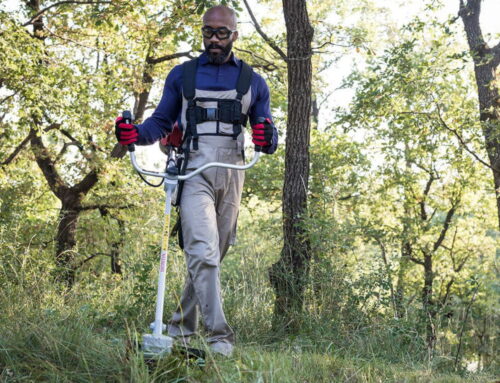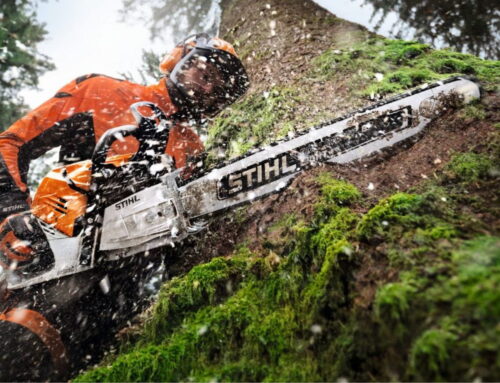

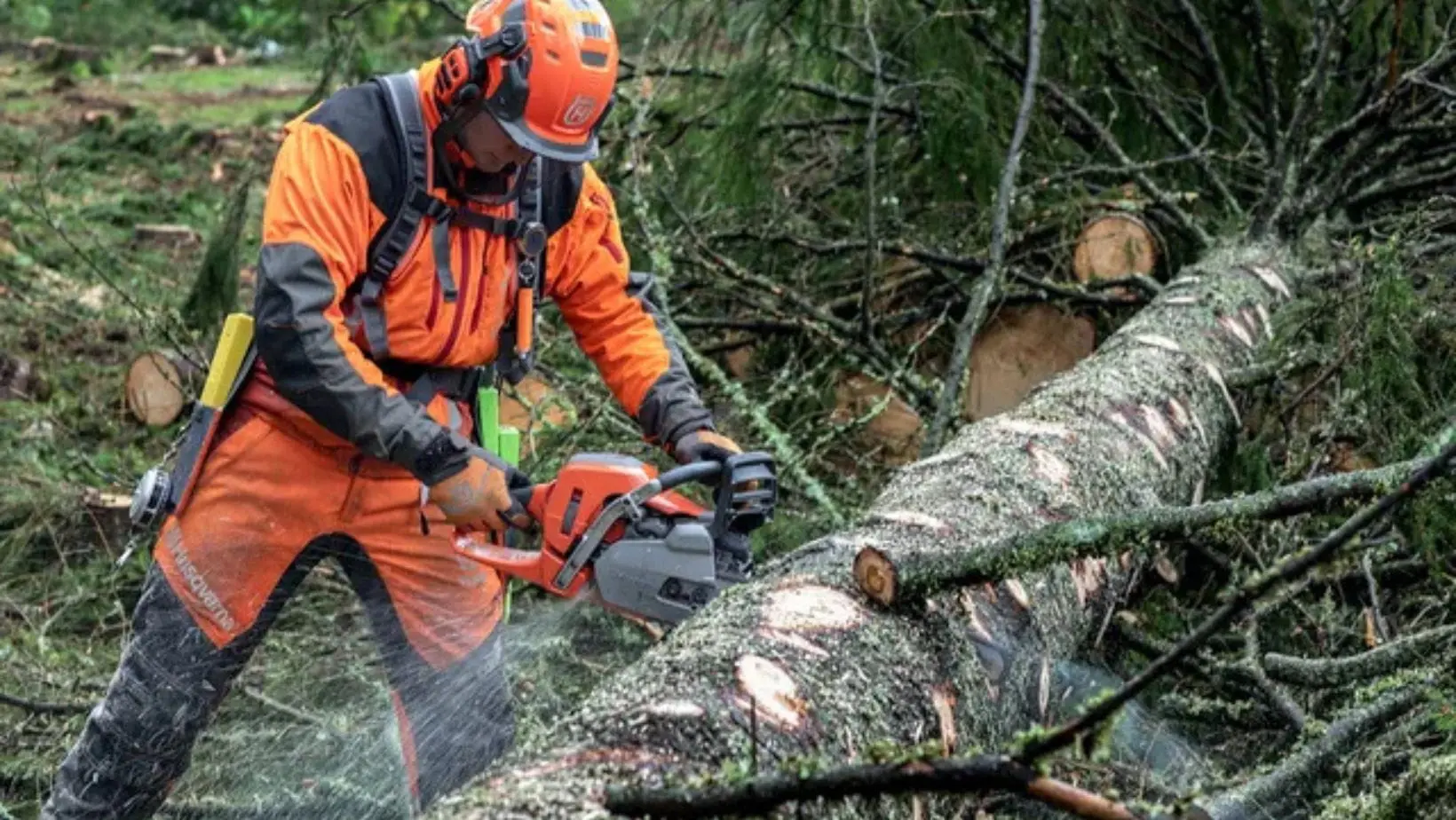
Storm clear ups can leave dangerous, tensioned timber and unstable footing, so it’s vital to approach chainsaw work with care. Always wear proper PPE, carry a first aid kit, and don’t work alone. Check your chainsaw before you start, work in good light, and use controlled cutting techniques. If a tree is unstable, tangled, or near power lines, stop and call a professional.
How to Stay Safe When Using a Chainsaw for Storm Clear Ups
Stormy weather can leave a garden or estate looking like a woodland obstacle course. Fallen branches, snapped limbs, and partially uprooted trees can block access, damage property, and create hazards that need dealing with quickly. For many homeowners and landowners, a chainsaw feels like the most direct route to getting things back under control.
But storm clear ups are not the same as routine garden work. Trees and branches behave differently after high winds. Wood can be twisted under tension, the ground may be unstable, and visibility can be poor. Add a sense of urgency and it’s easy to make a mistake. With the right approach, though, you can clear storm damage safely and efficiently without taking unnecessary risks.
Here, we explain the essential practices you’ll need to follow to remain safe when using a chainsaw to clear up storm damage, including advice on PPE, working with the weather, using correct cutting techniques, and more…
Start by Assessing the Scene, Not the Mess
 Before you even think about starting the saw, take a slow walk around the area and look for hidden dangers. After a storm, hazards often sit just outside your line of sight, especially if you’re focused on the most dramatic fallen branches.
Pay close attention to anything hanging overhead, any tree that’s leaning at an unusual angle, and any root plate that looks lifted or disturbed. A tree that has shifted in the ground may still be moving, even if it looks settled. It’s also vital to check for damaged cables, power lines, or anything electrical that could be live. If there’s any chance that electricity is involved, stop and contact the relevant professionals immediately.
You should also think about your footing. Storm conditions often leave lawns saturated, paths slippery, and debris scattered underfoot. If you can’t stand firmly and move confidently, it’s not a safe environment for chainsaw work.
Work With the Weather, Not Against It
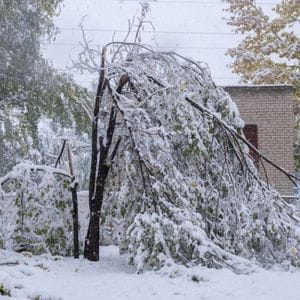 Storm clear ups often happen in poor conditions, but it’s important to recognise when the weather is still too risky. High winds can dislodge branches without warning, heavy rain reduces visibility and makes surfaces slick, and fading light can make it harder to judge distances and angles accurately.
If the weather is still unsettled, it’s usually safer to wait. A delay might feel frustrating, but it’s far better than working in conditions where you can’t see properly, keep your footing, or react quickly. Avoid starting a job late in the day when fatigue and darkness begin to creep in.
If Possible, Don’t Work Alone
Using a chainsaw to clear up after a storm is a job best not done alone. If something goes wrong, you need someone on-hand who can help, call for assistance, or guide emergency services to your location.
Even if the other person isn’t directly involved in the cutting, having them nearby makes the job safer. They can help keep the area clear, spot hazards you may miss, and support you with moving timber once it’s safely cut. Make sure you both agree on a safe working distance and can communicate clearly throughout.
Wear Proper Chainsaw PPE Every Time
 Personal protective equipment is one of the biggest differences between a near miss and a serious injury. A chainsaw can cause severe harm in a split second, and storm work increases the likelihood of awkward cutting angles, shifting timber, and unexpected movement.
Proper chainsaw PPE should include a chainsaw helmet with a visor and ear protection, chainsaw gloves for grip and protection, chainsaw trousers designed to reduce injury in the event of contact, and strong boots with toe protection and excellent traction. You should also wear practical, close-fitting outdoor clothing that won’t snag or get caught, avoiding anything loose that could interfere with safe handling.
Even if you’re ‘only doing a quick cut’, PPE needs to be non-negotiable. Most accidents happen during short jobs where people relax their standards.
Carry a First Aid Kit and Know What to Do in an Emergency
 A first aid kit should be part of your standard storm clear up kit, not an afterthought. Keep it somewhere accessible, not buried in the house or hidden at the back of a shed. It’s also wise to keep a fully charged phone on you, rather than leaving it indoors.
Just as importantly, know what you would do if you had an accident. Think about how you would call for help, how someone would reach you, and what your exact location is if you’re working on a large property or rural land. If you’re working with another person, make sure they know where the kit is and what to do in an emergency.
Check Your Chainsaw Before You Start
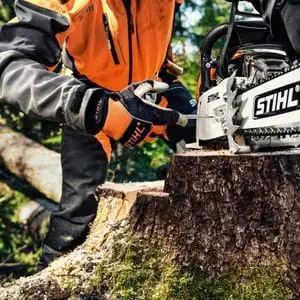 Storm clear ups are not the time to discover your saw is running poorly, has a loose chain, or isn’t oiling properly. A quick pre-use check helps prevent both mechanical failure and unsafe cutting behaviour.
Make sure the chain is sharp and correctly tensioned, the chain brake works as it should, and the saw is properly lubricated. A dull chain can make you push harder than you should, which increases the chance of kickback and reduces control. It also makes cuts less predictable, especially in awkward, storm-damaged wood.
If your chainsaw doesn’t feel right, stop and sort it before you continue. A saw that’s struggling is a warning sign, not something to work around.
Understand Why Storm-Damaged Wood Is So Dangerous
 After a storm, branches and trunks are often under tension and compression. That means the wood can behave like a spring. When you cut it, it may split, snap, roll, or shift suddenly. This is one of the biggest reasons storm clear ups are so risky, even for people who feel confident using a chainsaw.
A branch may look like it’s resting calmly, but it could be pinned underneath another limb, twisted around a trunk, or being held in place by a tangle of debris. The moment you cut, the forces change, and the timber can move quickly.
If you cannot clearly understand how the wood will move once cut, it’s time to stop and reassess. In some cases, the safest decision is to leave it to a trained professional, particularly if the timber is large or the movement could be violent.
Use Correct Cutting Techniques to Stay in Control
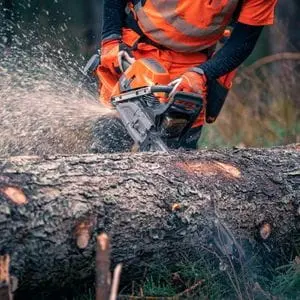 Good technique is about control, stability, and predictability. In storm clear ups, you want every cut to be deliberate, not rushed, and not made from an awkward stance.
Always hold the chainsaw firmly with both hands and keep a stable, balanced position before you begin cutting. Avoid cutting above shoulder height, as this reduces control and increases risk. If something is too high to cut safely from the ground, it’s not a DIY job. Reposition timber where possible rather than stretching, twisting, or leaning into the cut.
Be mindful of kickback, which can occur if the tip of the bar contacts wood unexpectedly. Let the saw do the work rather than forcing it through, as forcing increases the chance of a sudden movement or loss of control.
When cutting larger sections, plan your cuts so the timber doesn’t pinch the bar. If a log is resting on the ground or supported at both ends, it can close in as you cut. In these situations, a careful approach with controlled cutting helps prevent the saw getting trapped and reduces sudden shifts in the wood.
Clear Branches Methodically and Keep Your Escape Route Open
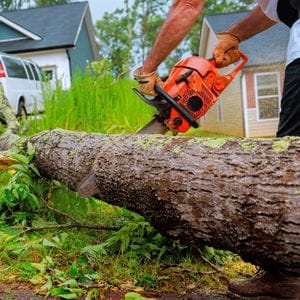 One of the easiest mistakes during storm clear ups is to focus so closely on the cut that you forget what might happen immediately after it. Branches can swing down, trunks can roll, and sections can drop suddenly once weight is removed.
Work from the outside in, dealing with smaller, loose branches first and keeping your feet clear of areas where timber could move. Make sure you have a clear route to step back if the wood shifts. You should never stand in a position where a trunk could roll onto you, and you should avoid working downhill from heavy timber where possible.
If you’re dealing with a tree that’s tangled, partially suspended, or resting on other branches, take extra care. These situations can be unpredictable, as a simple cut can cause a chain reaction of movement.
Know When to Stop and Call a Professional
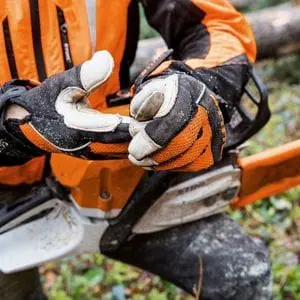 Some storm damage is beyond safe home chainsaw use, even if you have experience. If a tree is leaning over a building, tangled in other trees, split down the trunk, or near power lines, professional help is the safest option.
The same applies if the tree has partially uprooted and the root plate has lifted. That kind of damage can make the tree unstable and capable of shifting suddenly. If you’re in any doubt, it’s better to step away and get advice than to take a risk with a situation you can’t fully control.
Take Breaks to Avoid Tiredness
Chainsaw work is physically demanding, and fatigue is a major cause of mistakes. After a storm, you may also be working in damp, cold conditions, which makes it easier to lose concentration and grip strength.
Take regular breaks, keep yourself hydrated, and stop if you notice your arms tiring or your focus slipping. It’s better to clear storm damage over several shorter sessions than try and press on when you’re tired. Weary hands and rushed decisions are a dangerous combination around moving chains.
A Safe Storm Clear Up Starts With Calm Decisions
 Using a chainsaw for storm clear ups can be effective, but only when it’s done with the right safety habits in place. The most important thing is to approach the job with patience and caution, not urgency. Work with the weather, preferably not alone, wear proper PPE, keep a first aid kit close, and use controlled cutting techniques that keep you stable and in command of the saw.
If the situation looks unpredictable or involves large, tensioned timber, don’t gamble. Calling a professional is often the safest and most sensible option. Storm damage can be stressful, but the goal is always to restore your garden or estate without putting yourself at risk.