
Choose pruning tools by branch thickness and task: bypass/anvil secateurs, shears, loppers, pruning saws, pole pruners, hedge trimmers (petrol/electric/cordless) and chainsaws (short bar). Consider cordless for arthritis and always clean, sharpen and service tools.
Our Guide to Choosing the Best Pruning Tools for Your Garden
Pruning is one of gardening’s key tasks. It involves carefully removing certain parts of a plant, with the aim of promoting new growth. When done correctly, pruning will dramatically improve your plants’ health, appearance and overall structure. But if you prune badly, it will do far more harm than good. And if you’re going to prune successfully, it’s absolutely essential to start by using the correct pruning tools.
Which Pruning Tools Should I Buy?
You should select your basic pruning tools according to the type and thickness of the material you intend to cut. Once you’ve identified the right tools, you will then need to make further choices, relating to their specific style and, if applicable, how they’re powered.
So, in size ascending order, let’s take a look at the different pruning tools you can buy for your garden…
Secateurs
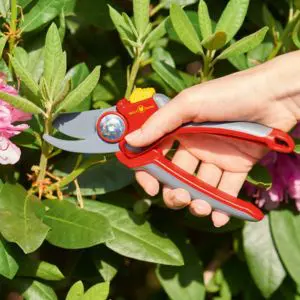 If you’re snipping small stems, deadheading flowers or pruning herbs, excuse the pun but a pair of scissors simply won’t cut it. To achieve a suitably clean, precise cut, which won’t damage the plant, you need the best secateurs.
There are two distinct types of secateur: bypass and anvil.
Bypass Secateurs
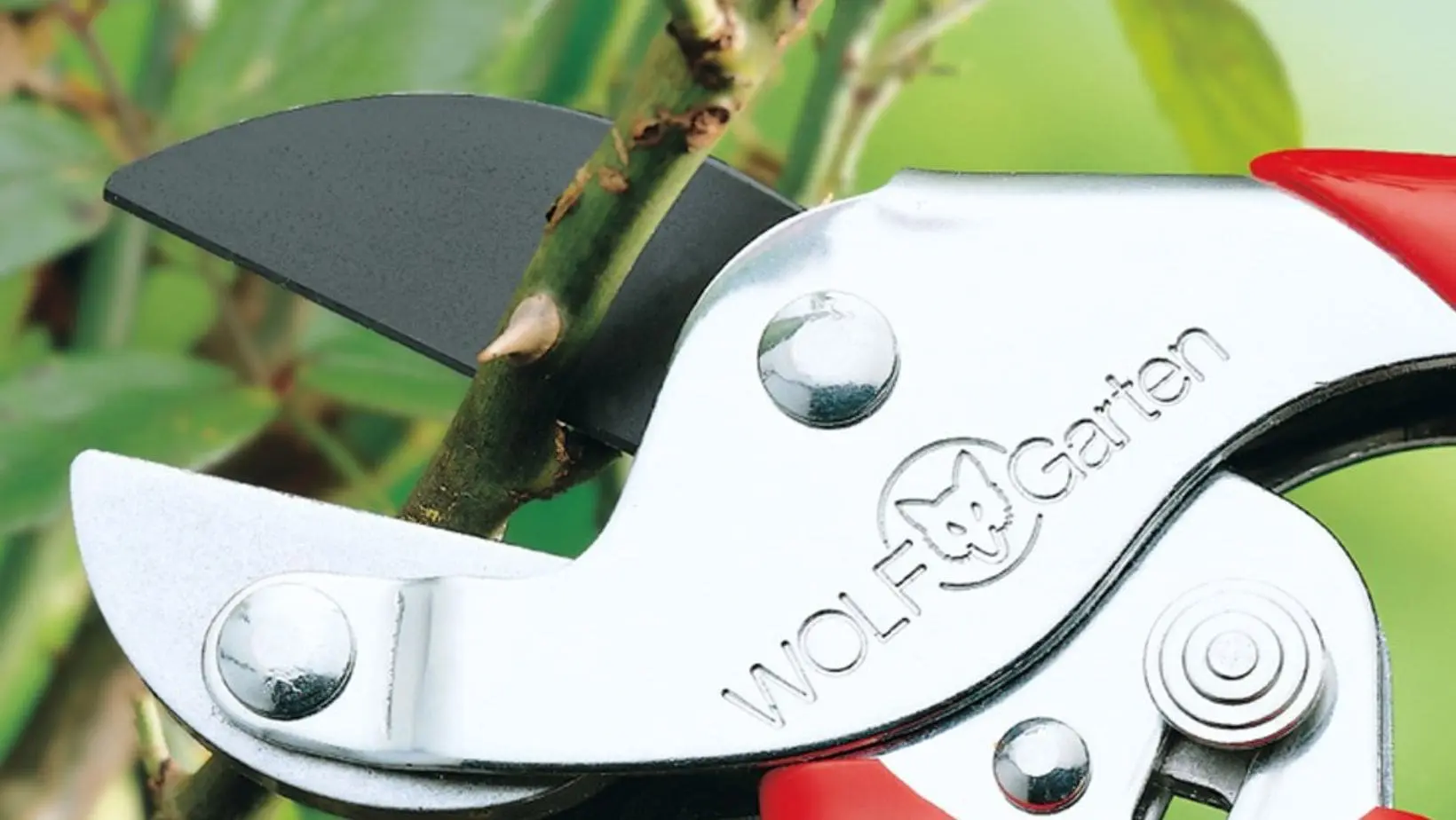
Bypass styles are the best pruning scissors for cutting soft, green stems. They are designed with two sharp blades, which slide past each other to make an exceptionally sharp cut. If you buy just one pair of secateurs, make them bypass because they’re by far the most versatile.
Anvil Secateurs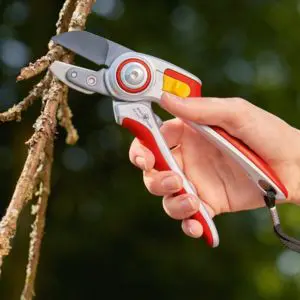
Anvil secateurs, on the other hand, are the best pruning clippers to cut dead or woody stems. They consist of one sharp blade and a flat metal plate, which supports the stem as the blade cuts through it. More forceful but less precise than bypass secateurs, they should not be used on soft, live stems, which they tend to crush rather than cut.
What Are the Best Secateurs for People with Arthritis?
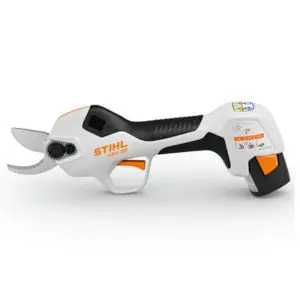
STIHL ASA 20 Cordless Secateurs
If you have arthritis or a damaged wrist, using secateurs can be a painful experience. However, help is at hand thanks to cordless secateurs. These battery-powered tools are good secateurs to use for pain-free, effortless cutting, so you can carry out your pruning to the highest possible standard, in double-quick time, without putting undue strain on vulnerable parts of your body.
Shears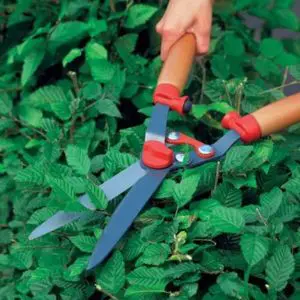
General-purpose garden shears are a versatile tool, used for trimming, thinning and shaping plants. With their two sharp blades, they will cut through leaves, stems and very thin branches with ease.
There are various types of specialist shears too, which have slightly modified designs to increase their suitability to perform the task in hand, the two most common being hedge shears and edging shears.
Perhaps the most interesting type are topiary shears, some of which are meant to be used with just one hand. Having specially designed blades made for very detailed cutting, they are the best garden pruning shears to use on compact plants with dense foliage.
 Loppers
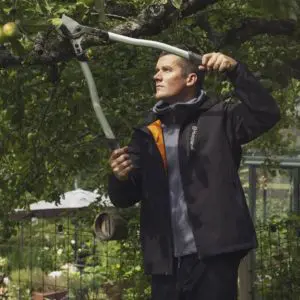
Think of loppers as a more powerful version of secateurs, with much longer handles. These lengthy handles have two major benefits: they increase your reach and provide added leverage to cut through thicker objects, which is why they’re the best pruning clippers to use on branches up to two inches thick. Naturally, loppers require you to use both hands.
Just like secateurs, they are available with either a bypass or anvil design. You should use the bypass style on living branches and anvil on those that are dead.
You can find all the best quality secateurs, as well as the best pruning shears and loppers here.
 Pruning Saws
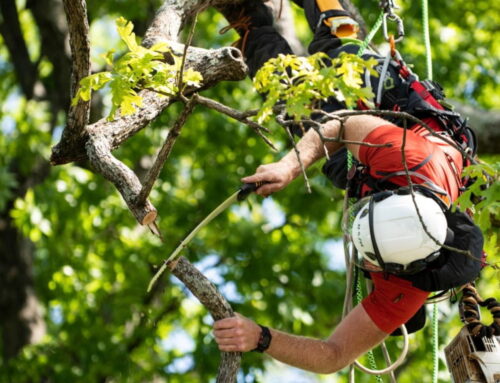
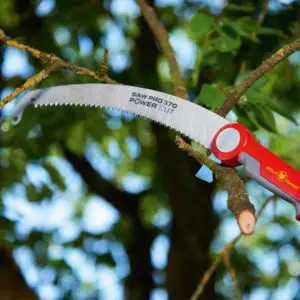
Next up are pruning saws. These are the best garden pruners to use if you need to cut through branches that are slightly too thick for loppers.
Pruning saws come with a variety of blade designs, including folding, straight and curved. Folding pruning saws are the handiest because you can slip them into your pocket, while pottering around the garden. Of the other two, those with straight blades are most suitable for cutting through living wood, while curved blade designs work best if the wood is dead.
You can also buy cordless pruning saws, which, again, are absolutely ideal for people suffering with arthritis or damaged wrists.
View the best tree pruning saws here.
 Pole Pruners
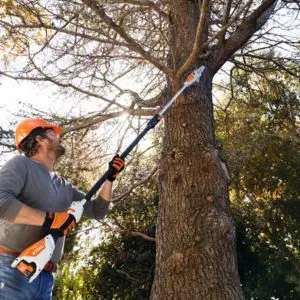
Sometimes referred to as long-reach or telescopic pruners, pole pruners are specifically designed to cut stems and branches that would otherwise be out of reach.
Some of these pole pruners are designed with secateur-type blades, others are fitted with a small pruning saw attachment, while many are supplied with both. Whatever their specific design, these tools essentially consist of a pruning tool mounted on a long pole, offering you a clear alternative to ladder work.
While basic, traditional pole pruners are still available, we prefer battery and petrol-powered models. Browse our full range of pole pruners here.
Hedge Trimmers
Hedge trimmers are the next tool on our list of garden pruners because they are the best tool for trimming bushes.
There are two distinct types of hedge trimmer you can buy: handheld and long reach, the latter being the ideal option if your hedge has grown well above head height.
The main other choice revolves around how the machine is powered. The options here consist of petrol, electric and cordless (battery) models.
 Petrol Hedge Trimmers
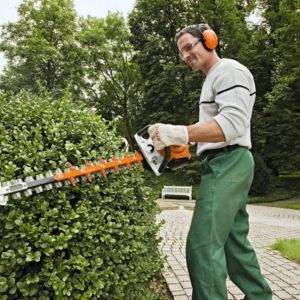
Petrol hedge trimmers are usually the most powerful and high performing. Add in the fact that they don’t need connecting to a lead, and they’re exactly what you need for extensive hedge trimming jobs. Because of these advantages, petrol models tend to be the most expensive.
Shop our full range of petrol hedge trimmers now.
Electric Hedge Trimmers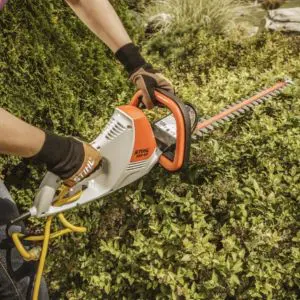
If you are a householder with an outside power supply, you might want to consider an electric hedge trimmer. Their advantages include lower than average price tags, quieter operation, zero emissions, and basic, user-friendly controls. All things considered; they make an excellent choice of entry-level hedge trimmer.
See our full range of electric hedge trimmers here.
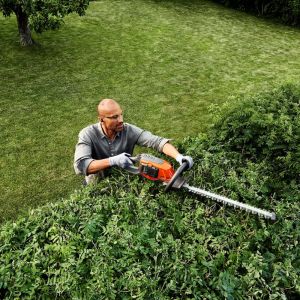 Cordless Hedge Trimmers
Cordless hedge trimmers combine the freedom of petrol with the advantages of electric models. Their only downside is that they tend not to be as powerful as other types of hedge trimmer, which limits their use to domestic work. However, we’re currently seeing huge advancements in cordless technology, so if you’re in the market for a commercial battery-powered hedge trimmer in the not-too-distant future, watch this space!
You can find all of our cordless hedge trimmers here.
And if you’d like to find out more about general hedge trimming, be sure to read Our One-Stop Guide to Effective Hedge Care and Maintenance, which includes advice on when and how to trim a hedge.
Chainsaws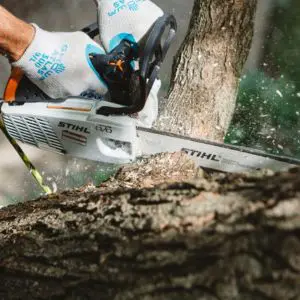
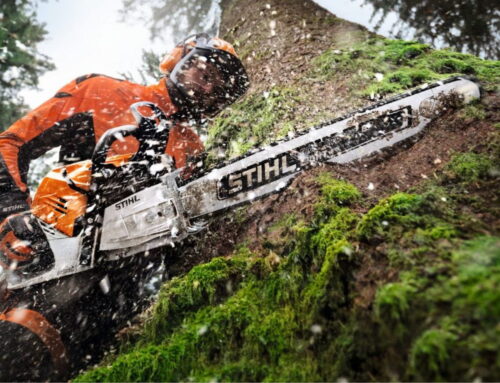
Chainsaws are the best tools for cutting tree branches. And just like with hedge trimmers, you’ll have a choice of petrol, electric and cordless models.
The key here is to select one with a short bar size of between 12 and 14 inches (the bar being the front plate that guides the chain). Anything longer is likely to be inappropriate for pruning.
Be sure to consider the size and weight of the chainsaw too. You need to be sure that you’re physically capable of handling this type of tool in what can be a highly demanding and dangerous task.
View our full range of chainsaws here.
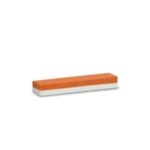
STIHL Sharpening Stone and Whetstone
Looking After Your Pruning Tools
Whichever pruning tools you choose for your garden, it’s essential that you look after them. The nature of these maintenance tasks will obviously vary depending on the tool.
With secateurs, it will simply involve cleaning the blades of sap, wiping or spraying them with oil, and an annual sharpening. (A sharpening stone, like the one shown here, is an excellent acquisition for this purpose.) But when it comes to power tools, you’ll need to be more thorough by carrying out strict before and after checks, as well as getting them regularly serviced.
You’ll find some useful tips for properly maintaining garden pruning tools here.
Further Guidance on Pruning
If you’d like some tips and techniques on pruning specific plants, you’ll find a great starting point here.
And should you have any questions relating to our range of garden pruning tools, please don’t hesitate to contact our friendly, UK-based Garden Machinery Experts, who will be delighted to assist you in any way they can.