
Hedges form living walls needing regular care: remove weeds, water, mulch, fertilise; trim usually twice yearly (check for nests, use PPE), prune sides and tops correctly; treat diseases and brown patches promptly; choose a suitable trimmer (hand, petrol, electric, battery) based on size and power.
Our One-Stop Guide to Effective Hedge Care and Maintenance
Hedges consist of lines of shrubs or small trees, which have been planted closely together to form a living wall. Suitable for use as a garden boundary, privacy screen or to compartmentalise an outdoor area, they provide valuable shelter and food for insects, birds and small mammals. Hedges are highly effective ways to capture pollution and block out noise too, but they need looking after if they’re to continue to remain healthy, grow densely, and do their jobs effectively.
Do All Hedges Need the Same Type of Maintenance?
The short answer to this question is no. There are a huge variety of hedges growing in the UK, both formal and informal, deciduous and evergreen. Popular varieties include box, yew, firethorn and conifers, each of which has their own unique characteristics and maintenance requirements.
If you’re thinking about buying a new hedge or would like specific tips relating to a particular type of hedge – say, laurel hedge maintenance, then the RHS provides a great starting point.
General Hedge Maintenance
Here, in our own hedge care guide, we will concisely explain the key tasks involved in providing general garden hedge maintenance and care. We’ll do this by examining when and how to trim a hedge; providing tips to prevent and overcome common hedge diseases, including brown patches; and showing you some of the garden machinery you can buy to help make your bush and shrub trimming as easy and effective as possible.
Getting Started
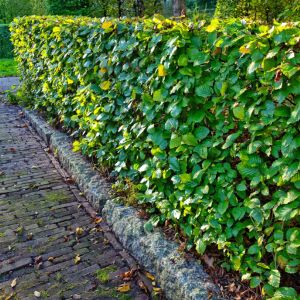 As good practice, you should get into the habit of carrying out a few small, basic tasks that lay the foundations for good hedge maintenance.
The first of these jobs involves removing weeds from the area around the hedge, to prevent them from competing for the water, light and nutrients that the hedge needs to thrive. Weeds can also harbour insects and diseases, which could potentially harm your hedging.
Secondly, be sure to give your hedge the water it needs to survive and prosper. The frequency with which you’ll need to do this depends on the type and age of the hedging. More established hedges are better equipped to tolerate drought than young hedging, so should only need watering once or twice a week during warm, dry spells.
With the above in mind, it’s a good idea to use mulch around the base of the hedge to supress weeds and retain moisture. An annual top dressing with a balanced, slow-release fertiliser, on the soil around the base of the hedge, will benefit it too.
Hedge Trimming
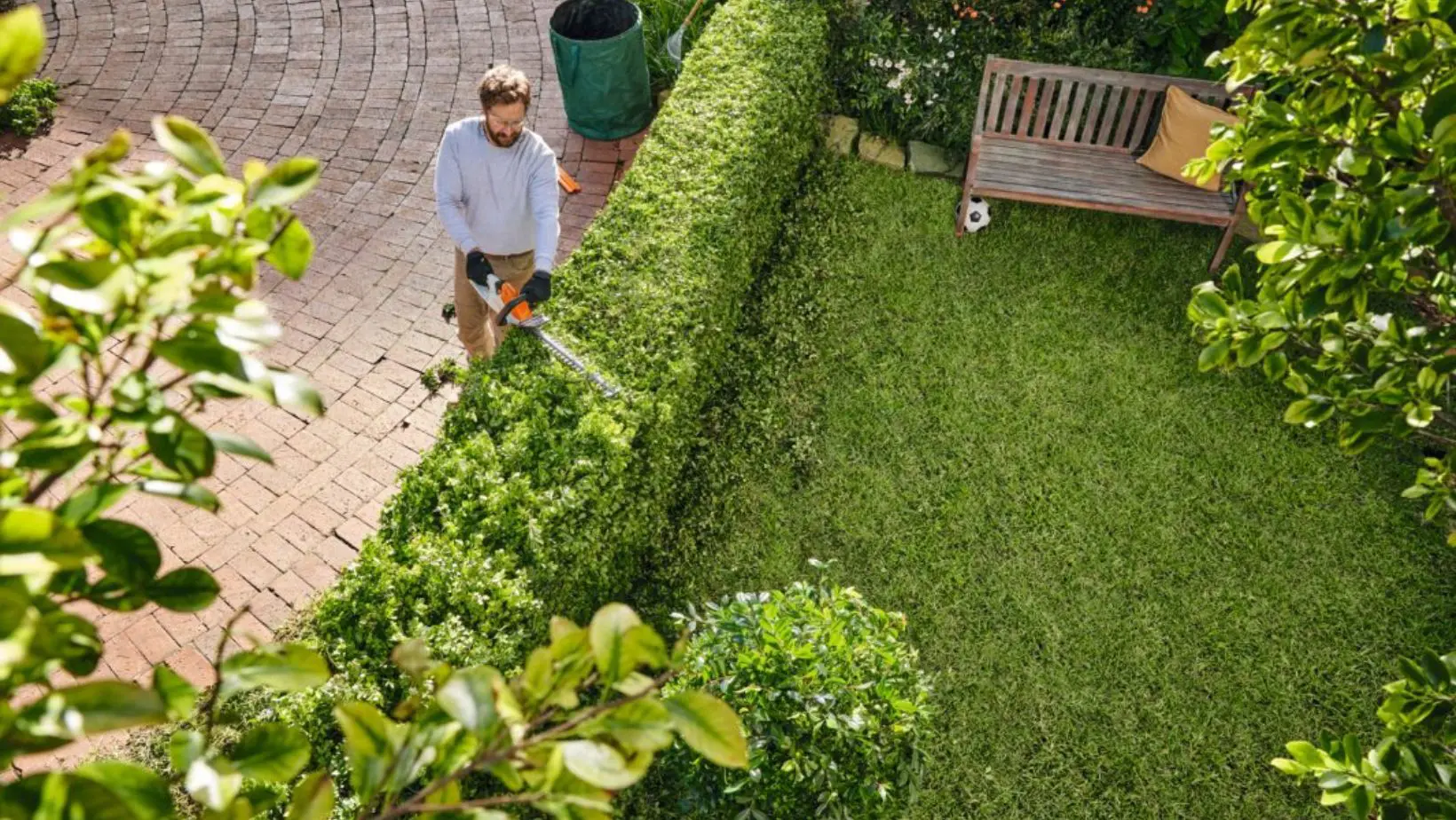
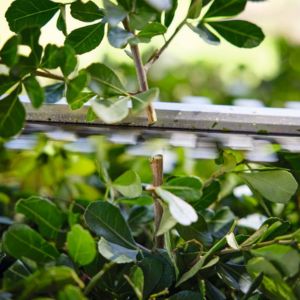 Not only does effective shrub trimming control the size of your hedge, but it also promotes denser growth. In effect, it is a form of pruning.
Before trimming, it’s essential to check your hedging for birds’ nests. Although the main nesting season lasts from March until August, it can go on for longer, so it’s best to always check, regardless of the time of year. And this isn’t just our advice; due to the Wildlife and Countryside Act 1981, it’s also your legal obligation. If you do happen to spot an active birds’ nest, postpone your trimming until the chicks have fledged.
When hedge trimming, you’ll obviously want to look after yourself too. So, particularly when using petrol, electric or battery-powered tools, be sure to check they’re in good condition and that you’re wearing the right personal protective equipment for the job.
When to Trim
Generally speaking, hedges need trimming twice a year, in order to encourage the strongest possible growth. However, there are exceptions. Yew and barbery hedges, for example, only need trimming once a year, while box and privet might benefit from three annual cuts. Once again, the RHS is an excellent source of advice on how often to trim different types of hedging plants.
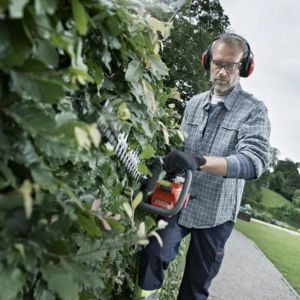 For those hedges requiring two trims, the first should be the most rigorous cut. You should carry this out in late winter or early spring, once the coldest weather has passed but before the growing season really kicks in. However, it’s important not to do this if the weather is still particularly cold because it could endanger thinner branches, as well as delay the overall regrowth of the hedge.
You should carry out the second trim during the summer months, and this will be a lighter cut. Here, it’s important not to trim if the weather is too hot and sunny because this could burn the interior leaves’ dermal tissue. So, the best possible time to give your hedge a summer cut is when the weather is slightly overcast.
How to Trim a Hedge
Firstly, you should remove any obstacles, so that you’ve got clear access to all areas of the hedge. Then, assess the overall state of the hedging. All other things being equal, a general trim should remove most young growth. But if growth rates haven’t been equal and you want a neat, uniform finish, you’ll need to adjust your trimming accordingly.
 The Sides of the Hedge
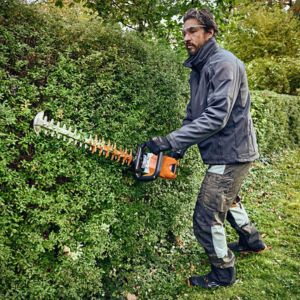
The first areas of the hedge to cut are the sides, starting at the bottom. Here, to achieve the straightest possible finish, it’s worthwhile laying a string line, at ground level, to help guide you. Hold the hedge trimmer level and trim upwards, in an arcing motion, so that you make contact with the flat face of the hedge.
It’s a very good idea to taper the hedge as you get higher, as this will ensure that light reaches the lower branches, encouraging growth and preventing bare patches.
How to Trim the Top of a Hedge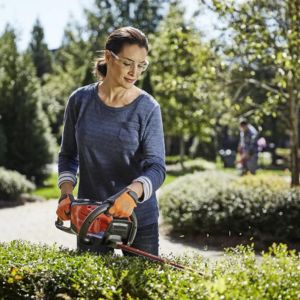
When trimming the top of a hedge, move the cutter bar horizontally and cut across at an angle of no more than 10 degrees.
There are two effective ways to ensure you end up with a flat hedge top. The first is to tie a piece of string to two stakes, positioned either end of the hedge. Adjust the string’s height so that it sits just below the desired height. The second method is to paint a line on the hedge, just above the desired height. This alternative method, of course, uses exactly the same principles to guide you.
While maintaining hedges, it’s always useful to take regular breaks to check your progress. Stand back and examine the hedge from different angles, just to ensure that it’s taking shape exactly as you planned.
Treating Hedge Diseases
Hedge diseases can be caused by a variety of factors, including poor maintenance, putting the hedging in an unsuitable location, fungal disease and pest infestation.
Of course, just like with most diseases, it’s always better to address the causes before any symptoms appear. You can do this by showing due diligence when purchasing hedging plants, keeping your tools and machinery clean and in good working order, as well as disposing of infected parts of the hedge at your local recycling centre. Never put them in your mulch or compost.
STIHL, who manufacture some of our finest hedge trimmers, have compiled a list of common hedge diseases, along with their symptoms, causes and remedies, which you can view here.
Dealing with Brown Patches on Hedges
Brown patches can develop on some species of conifer for various reasons, including incorrect pruning, aphids and fungal disease.
The best solution to remedy this is to cut those brown areas out. New hedging can then be planted in the bare area. Alternately, it might be possible to use stakes to train the hedging either side of the bare patch to grow in a direction that covers it up.
Choosing the Right Hedge Trimmer
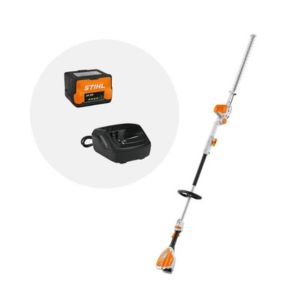
STIHL HLA 56 Cordless Long-Reach Hedge Trimmer Kit
When trimming a small hedge, chances are that a pair of hand shears will prove perfectly up to the job. However, for larger hedging, you’ll want to use a hedge trimmer.
There are two distinct types of hedge trimmer: standard and long reach, the latter being specifically designed for trimming hedges that have grown above head height.
You can find all of our long-reach hedge trimmers for sale here.
Once you’ve determined which type of hedge trimmer is best for you, you’ll need to decide how you want to power it. The choice here is between petrol, electric and battery-powered models.
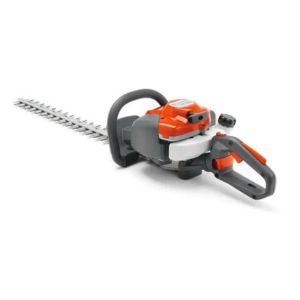
Husqvarna 122HD60 Petrol Hedge Trimmer
Petrol Hedge Trimmers
Petrol hedge trimmers offer you unrivalled power and professional-grade performance, making them the perfect choice for extensive hedge cutting jobs. Naturally, they do not need connecting to a power supply either, leaving you free to use them in more remote areas.
However, because of their power and premium performance, the downsides are that they tend to be more expensive and far noisier than other models.
View our full range of petrol hedge trimmers here.
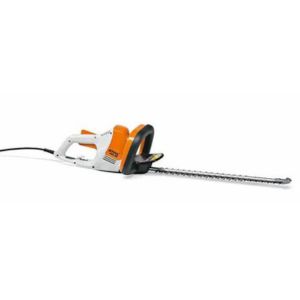
STIHL HSE 52 Electric Hedge Trimmer
Electric Hedge Trimmers
Electric hedge trimmers usually come with user-friendly designs and features. This makes them a great choice for beginners. They are cheap to buy, economical to run, and require minimal maintenance too – all good news if you’re on a budget and/ or want to enjoy fuss-free hedge maintenance.
Electric hedge trimmers’ other main selling points are that they are much quieter than petrol-powered models and produce zero emissions, making them a sound investment for environmentally conscious people who try to be considerate neighbours.
Their obvious downside is that the tool needs connecting by lead to an electricity supply, creating a potential hazard, requiring additional care. This reliance on a mains connection could also make electric hedge trimmers unsuitable for use in some remote locations.
See all of our electric hedge trimmers here.
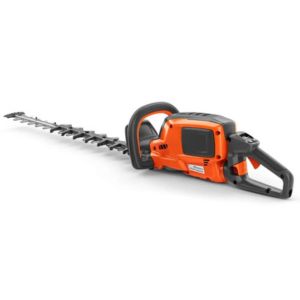
Husqvarna 522iHDR60 Cordless Hedge Trimmer
Battery Hedge Trimmers
In recent years, we’ve seen a sharp growth in the sales of battery hedge trimmers, which aim to give you the best of both worlds when it comes to hedge garden care.
Just like petrol-powered models, no cords mean no limits, leaving you free to move around the garden without being tethered to an electrical socket.
Battery hedge trimmers operate quietly and are emission free too, helping you contribute to a cleaner, greener environment. And there’s no need to worry about performing a pull start either, as they are invariably designed with a simple push-button or trigger mechanism.
The only potential downside to these cordless hedge trimmers concerns their power. Although leading manufacturers, like STIHL and Husqvarna, continue to make huge advances in this field, there’s no getting away from the fact that they’re unlikely to be as powerful as the best petrol-powered models.
Will this change in the future? Watch this space!
In the meantime, you can shop the best cordless hedge trimmers on the market here.
From all of us at Garden Machinery Direct, happy hedge trimming! We hope you’ve enjoyed reading our general guide on how to maintain hedges.