
Garden sprayers use pressure to apply treatments with control, making them ideal for lawns and targeted weed control. Mist blowers use air to project a fine mist over longer distances, so are suited to trees and dense hedging. Choose between sprayers and mistblowers based on coverage area, plant height and precision required. Misting fans are a different type of machine to both, being designed for cooling rather than chemical application.
Sprayer vs Mist Blower: Key Differences and Which to Choose
Keeping your garden healthy and under control isn’t just about choosing the right treatments — it’s about applying them properly. The way a product is delivered can affect everything from coverage and efficiency to safety and long-term results. That’s where understanding your equipment becomes essential.
Terms like ‘garden sprayer’ and ‘mistblower’ are often mentioned in the same breath, yet they perform very different roles. Add misting fans into the conversation too, and it’s easy to see why gardeners sometimes feel unsure about which machine does what. In this guide, we’ll break it all down clearly, so you can choose the right tool for your space and use it with confidence.
What Is a Sprayer?
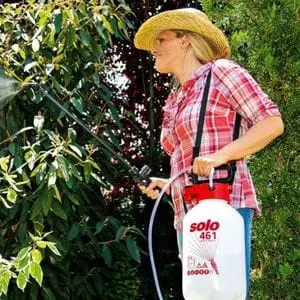 A garden sprayer is designed to apply liquid treatments in a controlled, pressurised stream. Whether you’re using a compact plant sprayer for spot treatments or a larger backpack weed sprayer for wider areas, the principle remains the same: liquid is forced through a nozzle under pressure, creating droplets that can be directed precisely where needed.
Sprayers are commonly used for:
- Weed control
- Feeding lawns
- Applying moss treatments
- Treating pests and fungal issues
- Watering delicate plants
For many home gardeners, a good garden sprayer is one of the most versatile tools in the shed.
Typical Characteristics of a Sprayer
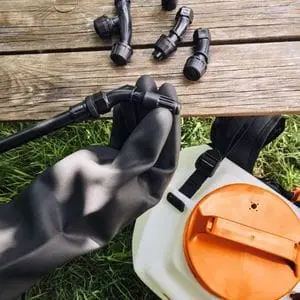 Most sprayers operate using hydraulic pressure rather than air assistance. That means the liquid itself is pressurised inside the tank and released through a nozzle to form droplets.
The key characteristics of these machines include:
- Adjustable spray patterns
- Controlled droplet size
- Short to moderate range
- Reduced drift compared to air-assisted systems
- Accurate, targeted application
Because of this level of control, a weed sprayer for lawns is particularly useful when applying selective treatments. You can focus on affected areas without risking unnecessary spread onto borders or ornamental planting.
Common Types of Sprayer
There’s a wide range of sprayers available, each suited to different jobs and garden sizes.
Handheld Pump Sprayers
A hand held pump sprayer is ideal for small areas, pots, greenhouse work or targeted weed control. These compact units are easy to carry and simple to use. They rely on a garden sprayer pump mechanism where pressure is built manually before spraying.
Hand pump sprayers tend to be the best option for light domestic tasks.
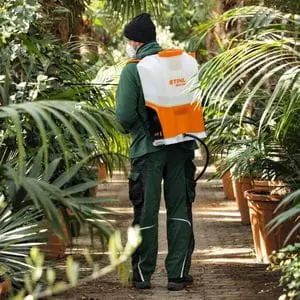 Knapsack and Backpack Sprayers
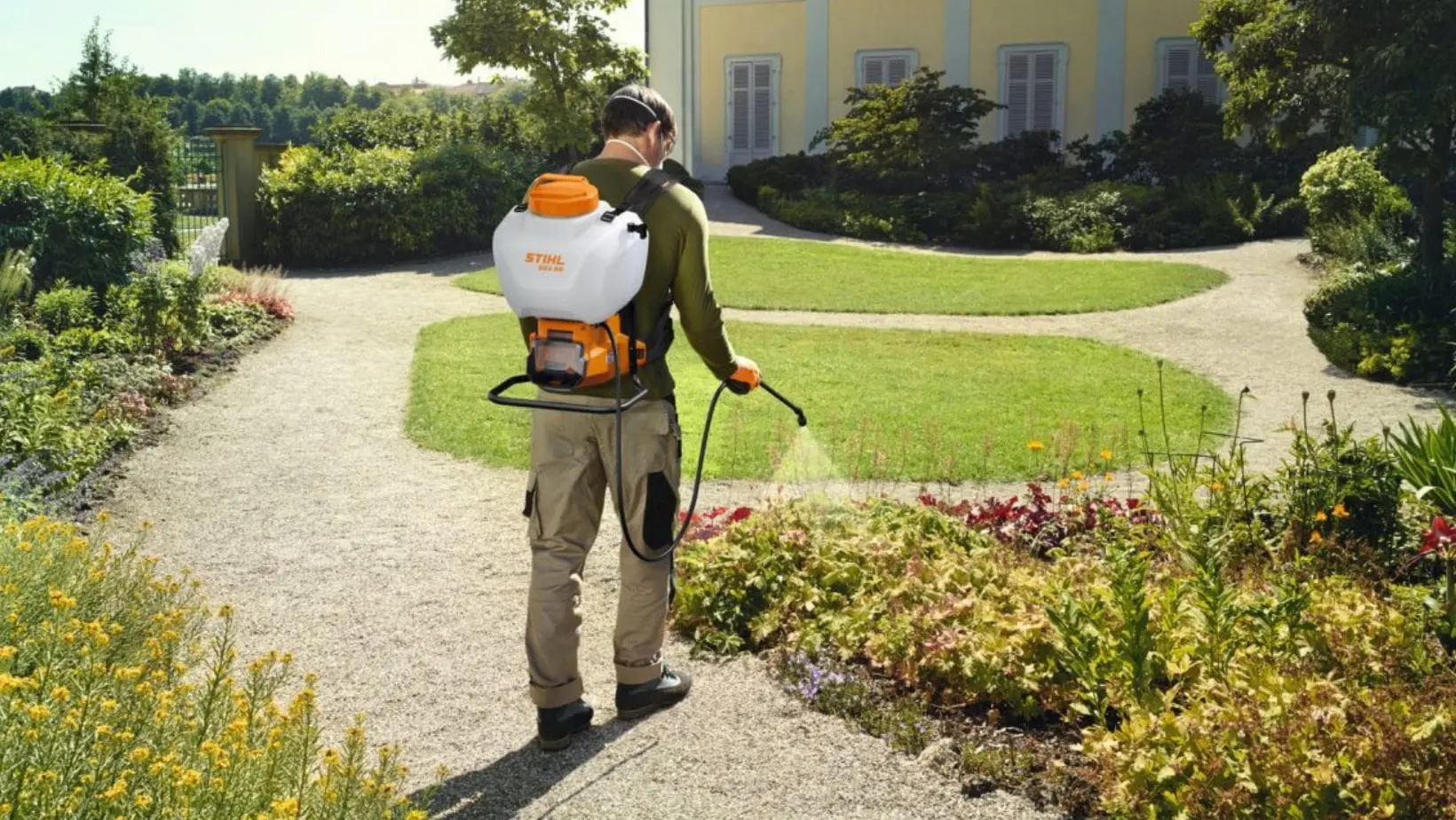
For larger areas, a backpack weed sprayer pump allows you to cover ground more efficiently. Worn comfortably on the back, these ergonomically designed units free up movement and make it easier to treat larger areas, like lawns, paths and driveways.
A backpack sprayer typically offers greater tank capacity, longer lance reach, and improved comfort for extended use.
Battery Sprayers
A cordless electric garden sprayer removes the need for manual pumping. Instead, a built-in motor maintains consistent pressure. This delivers even application and reduces operator fatigue.
If you’re spraying a medium to large-sized garden, you’ll find a battery-powered model far more convenient than a manual weed sprayer pump system.
When choosing the best garden sprayer for your needs, consider your garden’s size, frequency of use, and whether you need portability and/ or continuous pressure.
What Is a Mist Blower?
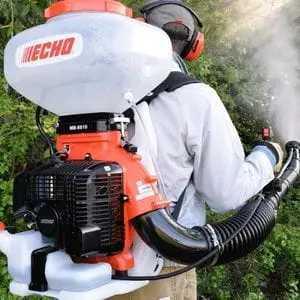 A mist blower is a different machine altogether. While it also applies liquid treatments, it uses a powerful air stream to carry very fine droplets over greater distances.
Instead of relying purely on hydraulic pressure, a mistblower combines liquid delivery with high-velocity airflow generated by an engine-driven fan.
Typical Characteristics of a Mist Blower
Mist blowers are usually petrol-powered and designed for more demanding applications. Their defining features include:
- Air-assisted droplet propulsion
- Very fine mist production
- Extended reach
- Strong penetration into dense foliage
- Higher coverage rate
The air stream helps droplets reach the underside of leaves and penetrate thick hedge growth. This makes them particularly effective in orchards, woodland settings, large estates, and commercial horticulture.
Common Uses for Mist Blowers
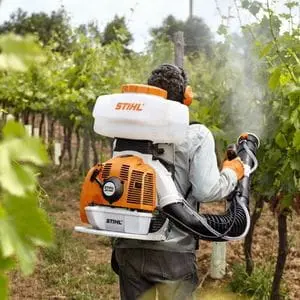 Mist blowers are commonly used for:
- Treating tall hedges
- Orchard and vineyard spraying
- Tree canopy applications
- Managing large shrubs
- Commercial grounds maintenance
Because the droplets are extremely fine and air-driven, they cover larger areas quickly. However, these machines require more careful handling, as lighter droplets can be more susceptible to drift in windy conditions.
Are the Terms ‘Sprayer’ and ‘Mist Blower’ Interchangeable?
Technically, no.
While both machines apply liquid treatments, they operate differently and are suited to distinct tasks. In everyday conversation, someone might refer to a mist blower simply as a ‘sprayer’, but strictly speaking they are separate types of garden machine.
A sprayer uses pressure alone to deliver liquid.
A mist blower uses pressure combined with air velocity.
Understanding this difference will help you choose the right tool for the job.
Which Should You Choose?
 Choosing between a hand pump sprayer, backpack sprayer, electric garden sprayer, or petrol mistblower depends on three main factors:
- The size of the area you’re treating
- The type of vegetation
- The level of control required
For small gardens and occasional use, a simple hand held pump sprayer is often perfectly adequate. For larger lawns and regular weed management, a backpack sprayer improves efficiency and comfort, especially if it’s battery powered. Where height and density come into play, mist blowers offer clear advantages.
In terms of the choice between sprayers and mistblowers, here’s a simple way to think about it:
- Ground-level, controlled treatments → choose a sprayer
- Height, density, large coverage areas → choose a mist blower
For most domestic users, the best garden sprayer will handle all of their regular spraying tasks. Mist blowers tend to be more common in professional or large-scale settings, though serious gardeners with extensive planting may also benefit from one.
A Quick Word on Misting Fans
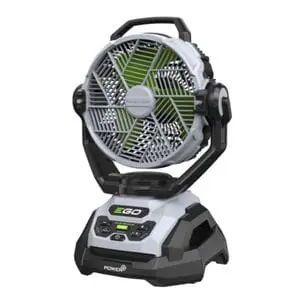 Misting fans are sometimes mentioned alongside mist blowers because both produce a fine mist. However, their purpose is completely different.
A misting fan is designed for cooling rather than chemical application. It combines a fan with a water mist system to create evaporative cooling. As the water droplets evaporate, they absorb heat from the air, lowering the surrounding temperature.
Misting fans are commonly used in:
- Garden centres
- Outdoor hospitality areas
- Events
- Greenhouses
- Patio spaces
They use clean water only and are not suitable for pesticides or weed control. Unlike a mist blower, they are not directional treatment tools. Instead, they disperse mist broadly to cool a defined area.
Shop Sprayers, Mist Blowers, and Misting Fans Here
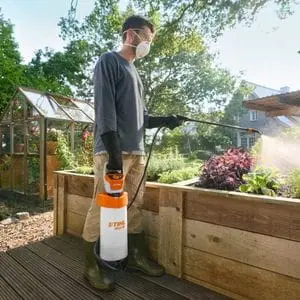 Whether you need a compact garden sprayer pump for light domestic work, a robust backpack sprayer for weed killer application, or a professional-grade mistblower for serious horticultural work, you’re in exactly the right place to find one. That’s because our comprehensive range of sprayers, mist blowers and misting fans is designed to meet the needs of all types of domestic and commercial customers.
What’s more, our friendly team are always on hand to provide expert advice. We can help you choose exactly the right machine for the job and offer clear guidance on how to get the best from it, so you can invest in a new sprayer, mist blower or misting fan with complete confidence.
Explore our Sprayers & Mist Blowers category today and take a major step forward to keeping your garden, grounds or outdoor space in tip-top condition.