


Silky saws are special because they combine a proud Japanese heritage, efficient pull-cut design, and precision-ground teeth that deliver fast, clean pruning cuts. This guide explores the origins of the brand, what makes a Silky pruning saw different, how to use one correctly, and highlights popular models including the Silky Pocketboy, Super Accel 21, and Gomtaro.
What Makes Silky Saws So Special?
Few hand tools inspire the kind of loyalty that Silky saws do. Among arborists, landscapers and serious gardeners, the name has become synonymous with precision pruning. Ask professionals what their preferred pruning saw is and you’ll often hear the answer: Silky.
But what exactly sets these tools apart? Why does a simple hand saw attract such a devoted following? The answer lies in a combination of heritage, engineering, and thoughtful design that has been refined over more than a century.
In this guide, we’ll explore the origins of the company, explain what makes a Silky saw different from many other pruning tools, look at why these saws are so widely respected, and offer advice on the correct way to use one. We’ll also highlight a few standout models so you can get to appreciate the range of options available.
The Origins of Silky Saws
 Silky’s story begins in Japan in 1919, when founder Katsuji Miyawaki began manufacturing saws in the town of Kishi. This area of Japan is well known for its steelworking tradition and has long been associated with high-quality blades and cutting tools.
From the start, the company focused on producing tools that combined traditional Japanese craftsmanship with innovative manufacturing methods. The goal was simple: create saws that cut more efficiently, last longer, and deliver cleaner results than conventional designs.
Over time, the company refined its approach and introduced new tooth designs and production techniques. By the late twentieth century, the brand name Silky had become recognised internationally. Today, these tools are manufactured in Ono, Japan, home to the world’s finest cutlery steel. They are used by professionals across the world, from forestry workers to tree surgeons and landscape contractors.
What Makes Silky Saws Different?
These Japanese pruning saws have a number of carefully engineered features that make them stand out from the competition.
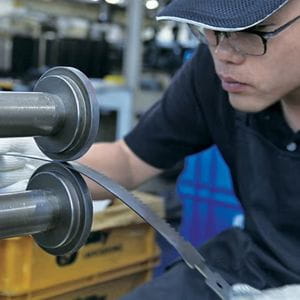 One of the most important differences is that most Silky saws cut on the pull stroke rather than the push stroke. This approach allows the blade to remain under tension during cutting, which means it can be thinner without sacrificing strength. A thinner blade removes less material from the cut, producing smoother results and reducing the effort required.
Another key factor is the way the teeth are manufactured. Instead of being stamped into the blade like many mass-produced saws, Silky teeth are precision-ground to create extremely sharp cutting edges. This ensures the saw bites into wood quickly and maintains consistent performance over time.
Silky also uses advanced tooth geometry known as Mirai-Me technology. Each tooth features multiple cutting angles designed to slice cleanly through timber while clearing sawdust from the kerf. The result is a cutting action that feels remarkably smooth and fast compared with many other hand saws.
High-quality steel is another important part of the equation. The blades are made from premium Japanese steel and undergo a specialised impulse-hardening process that strengthens the tooth tips. This helps them retain their sharpness even after repeated use.
Together, these elements create a Silky hand saw that performs with a level of efficiency many gardeners and arborists find hard to match.
Why Silky Saws Are So Popular
 The popularity of Silky saws is not simply about precision engineering. It also comes down to how they perform in real working conditions.
Professionals often choose a Silky pruning saw because it allows them to make quick cuts without excessive effort. This matters when pruning multiple branches or working high in the canopy, where efficiency and reliability are essential.
Clean cutting is another important advantage. The sharp teeth and thin blade help produce neat pruning cuts that minimise damage to the tree. This is particularly important in arboriculture, where poor cuts can leave trees vulnerable to disease.
Comfort and ergonomics also play a role. Many Silky tools feature rubberised handles designed to provide a secure grip, even when wearing gloves or working in damp conditions. The balance of the saw helps the user maintain control, allowing accurate cuts in tight or awkward positions.
Finally, Silky’s diverse range of products makes it easy to find a saw suited to different tasks. From compact folding tools to larger fixed-blade models, including Silky pole saws, the company offers equipment for almost every pruning situation.
Examples of Silky Saws
To help you appreciate the types of saw on offer, let’s take a look at some of Silky’s tools. Each one is designed with a particular type of work in mind, allowing users to select the right Silky saw for the job.
Silky Pocketboy
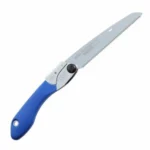 Widely appreciated for its portability, the Silky Pocketboy is one of the most compact models in the range. This lightweight Silky folding saw features a short blade that folds neatly into the handle, making it easy to carry in a pocket, backpack or gardening kit. Despite its small size, it delivers an unrivalled combination of strength and flexibility, thanks to Silky’s precision-ground teeth and thin blade design. Available with a choice of blade lengths, the Pocketboy is ideal for light pruning, trimming smaller branches, or general garden maintenance. It’s a practical option for gardeners who want the efficiency of a professional Silky saw in a highly portable format.
Super Accel 21
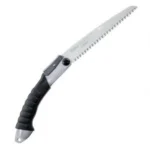 The Super Accel 21 is a popular mid-sized Silky pruning saw designed for versatility. With its 210 mm blade, it offers a good balance between cutting reach and portability. Razor-sharp teeth, with four cutting angles, allow it to glide through green wood quickly, producing smooth cuts with minimal effort required. The lightweight aluminium handle features a comfortable rubber grip, helping maintain control during extended use. This Silky folding saw is a popular choice with gardeners, landscapers and arborists looking for a reliable tool to tackle a wide range of pruning tasks.
Gomtaro
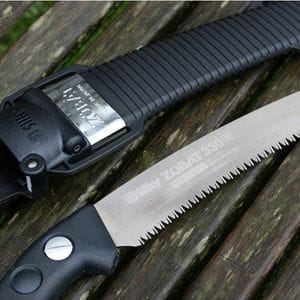
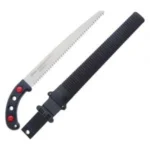 Offering a choice of blade lengths up to 300 mm, the Silky Gomtaro represents the professional end of the range. It is widely used by arborists who need a durable fixed-blade saw. Unlike the above models, the blade remains permanently mounted and is supplied with a protective scabbard for safe carrying. This design gives the saw greater rigidity, making it ideal for heavier pruning work. The aggressive tooth pattern and precision-ground blade allow the Gomtaro to cut quickly through thicker branches while maintaining clean results. For professionals seeking a dependable Silky hand saw for demanding tree work, the Gomtaro is a trusted option.
Using a Silky Saw Correctly
To get the most from a Silky tool, it’s important to use it as intended. Because these saws cut on the pull stroke, the correct technique is slightly different from that used with traditional Western saws.
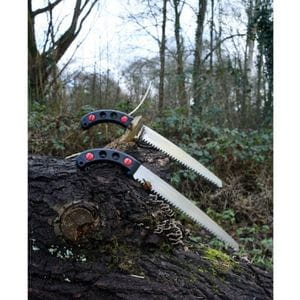 The first step is to position the blade gently against the branch, placing the teeth closest to the handle first. Begin with a light pull stroke to establish the cut. Once the teeth have engaged with the wood, smooth pulling motions will allow the saw to work efficiently. The push stroke should be relaxed and used mainly to reposition the blade.
Applying excessive force can reduce efficiency and increase wear on the teeth. The design of a Silky pruning saw allows it to cut quickly with surprisingly little effort, so it’s best to let the tool do the work.
Another point to remember is to avoid twisting the blade while it remains in the cut. Because Silky blades are relatively thin, twisting them sideways might cause damage. If the cutting angle needs to change, it is safer to withdraw the blade and reposition it.
Using the correct technique helps maintain cutting performance and ensures the saw continues to deliver the clean results that have made this brand so popular.
Replacement Blades and Ongoing Care
Even the finest tools eventually require maintenance. Another advantage of Silky products is that replacement blades are readily available, allowing users to extend the life of their saw rather than replacing the entire tool.
We stock genuine Silky replacement blades for a number of popular models, including the Silky Gomboy. This means users can maintain the sharp cutting performance their saw was designed to deliver.
 Discover Silky Saws at GMD
For gardeners, landscapers and tree care professionals looking for a reliable pruning tool, Silky has built a reputation that few brands can match. Thanks to their intelligent designs, exceptional Japanese craftsmanship, and superior cutting performance, Silky saws are a firm favourite amongst those who rely on their tools every day.
Explore our Silky Saws collection today to find the best Silky saw for your needs. Whether you’re searching for a compact folding saw, professional pruning tool, or replacement blades to keep existing equipment performing at its best, Garden Machinery Direct is your one-stop shop for Silky.