
Unsure what size lawn mower you need? This guide explains how to choose the right lawn mower cutting width based on your lawn size, garden layout, access, storage space and the time you want to spend mowing. It also explores how battery, electric and petrol models, plus push and self-propelled drive, fit into the equation, helping you find the perfect mower for your garden.
Our Guide to Choosing the Right Lawn Mower Cutting Width
Buying a new lawn mower can feel surprisingly complicated. With so many models available, it’s easy to focus on engine size, battery voltage or brand reputation, yet one of the most important decisions is often overlooked: the mower’s cutting width.
The width of the cutting deck has a huge influence on how long it takes to mow your lawn; how easy the machine is to manoeuvre and whether it can comfortably fit through gates or between flower beds. Choose a mower that’s too narrow and you’ll spend longer mowing than necessary. Go too wide and you could struggle around obstacles or even find the mower won’t fit into parts of your garden.
In this guide, we’ll explain how to choose a lawn mower cutting width based on your lawn size, garden layout, storage space and mowing habits, while also looking at how power source and drive system might further influence your choice.
Why Cutting Width Matters
 A lawn mower’s cutting width is the width of grass it cuts in a single pass. The wider the deck, the more grass you cover with every strip across the lawn.
For example, a mower with a 53 cm (21″) cutting width will cut considerably more grass per pass than one with a 34 cm (13″) deck. Across an entire lawn, this can save a significant amount of time.
However, bigger isn’t always better. Wider machines are generally heavier, require more storage space and can be less manoeuvrable around trees, borders and garden furniture. The ideal lawn mower cutting width is therefore a balance between efficiency and practicality.
Start by Considering Your Lawn Size
The size of your lawn should be the starting point when choosing a mower.
As a general guide, lawns up to around 150 m² benefit from compact machines that prioritise manoeuvrability. Gardens between roughly 150 and 500 m² are well suited to medium-sized mowers that balance efficiency with ease of handling. Larger lawns between around 500 and 1,000 m² usually justify wider cutting decks that reduce mowing time, while anything substantially bigger may be better maintained using a ride-on mower.
Although these are useful guidelines, lawn size alone should never determine your choice. Two gardens with the same area can require completely different machines depending on their layout.
What Size Lawn Mower Do I Need for a Smaller Garden?
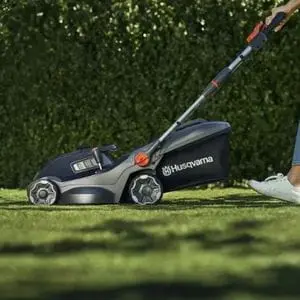 If you’re looking for the ideal lawn mower for small garden use, manoeuvrability is often more important than outright speed.
A compact mower with a cutting width between 30 cm (12″) and 38 cm (15″) is usually sufficient for smaller lawns. These machines are lightweight, easy to turn and capable of reaching awkward corners where larger models become cumbersome.
Smaller cutting decks are also ideal when lawns contain winding paths, flower beds, children’s play equipment or numerous ornamental features. Rather than struggling to steer a wide machine, you’ll find it much easier to produce a neat finish using a smaller model.
Compact mowers require less storage space too, making them perfect for sheds or garages where every centimetre counts.
Choosing a Lawn Mower for Medium Gardens
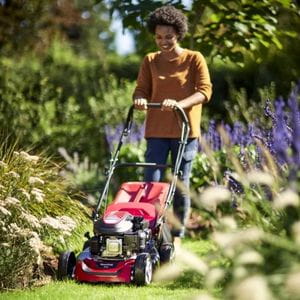 When choosing a lawn mower for medium-sized gardens, it’s worth looking for a machine that improves productivity without sacrificing too much manoeuvrability.
For areas between approximately 150 and 500 m², a cutting width of around 40 cm (16″) to 46 cm (18″) offers an excellent compromise. These lawnmowers cover noticeably more ground than compact models while remaining easy to manoeuvre around typical suburban gardens.
If your lawn consists mainly of one open area, choosing the wider end of this range can noticeably reduce mowing time. Conversely, gardens with several separate lawn sections may benefit from the slightly narrower options.
The Best Lawn Mowers for Large Gardens
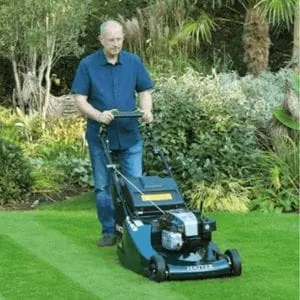 Finding the right lawn mower for large garden maintenance is often about efficiency.
For lawns approaching 500 m² and above, a cutting width between 48 cm (19″) and 56 cm (22″) allows you to cover substantial areas quickly. Fewer passes mean less time spent walking behind the mower and a faster overall mowing session.
If your property features expansive, uninterrupted lawns with few obstacles, wider decks definitely make sense. However, if large lawns are broken up by mature trees, garden buildings or extensive planting, an extremely wide mower may actually become less efficient because of the additional manoeuvring required.
Once lawn areas become particularly extensive, typically well beyond 1,000 m², many homeowners find that a ride-on mower provides the most practical solution.
Don’t Forget About Access
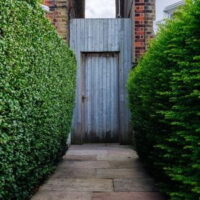 One of the most common mistakes buyers make is forgetting to measure access points before purchasing a mower.
Garden gates, side passages and narrow pathways can all restrict the size of machine that can reach your lawn. A mower may have an attractive specification on paper, but if it cannot fit through your gate, it’s obviously not the right choice.
Remember that manufacturers usually quote the cutting width rather than the mower’s total overall width, which will often be several centimetres greater due to the wheels and bodywork. So, choose a machine with a cutting width smaller than your narrowest access point to avoid disappointment.
Obstacles Can Influence the Ideal Cutting Width
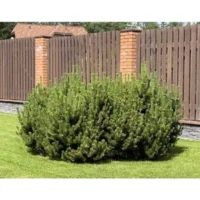 The shape of your garden is often just as important as its overall size.
Lawns containing numerous trees, shrubs, flower beds, ponds or garden ornaments demand frequent turning and careful manoeuvring. In these situations, a slightly narrower mower often proves quicker overall because it can negotiate obstacles more easily.
Conversely, large rectangular lawns with very few interruptions allow wider machines to work at their full potential.
This is why two gardens of identical size may benefit from different mowing equipment.
Consider Your Storage Space
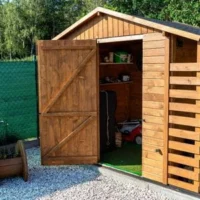 Storage is another factor that’s easy to overlook.
A mower with a wider cutting deck naturally occupies more floor space. It may also have a larger grass collector, longer handles and greater overall dimensions.
If your shed is already home to bicycles, garden tools and outdoor furniture, a more compact mower could make everyday storage far easier.
Many modern lawn mowers feature folding handles that reduce their storage footprint, but it’s still sensible to check the overall dimensions before making your purchase.
How Much Time Do You Want to Spend Mowing?
 Your available time can significantly influence the ideal cutting width.
Some gardeners enjoy taking their time and see mowing as an opportunity to relax outdoors. Others simply want to complete the job as quickly as possible.
If speed is your priority, choosing the widest mower that’s practical for your garden can dramatically reduce mowing time. Every additional centimetre of cutting width means fewer passes across the lawn.
However, selecting an excessively wide mower purely for speed may become counterproductive if you’re constantly reversing, turning or repositioning around obstacles.
The most efficient mower is therefore one that matches both your garden and your preferred mowing routine.
How Power Source Fits Into the Decision
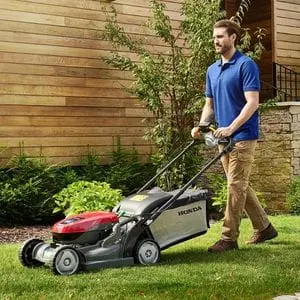 Although this is primarily a lawn mower size guide, your choice of power source also plays an important role.
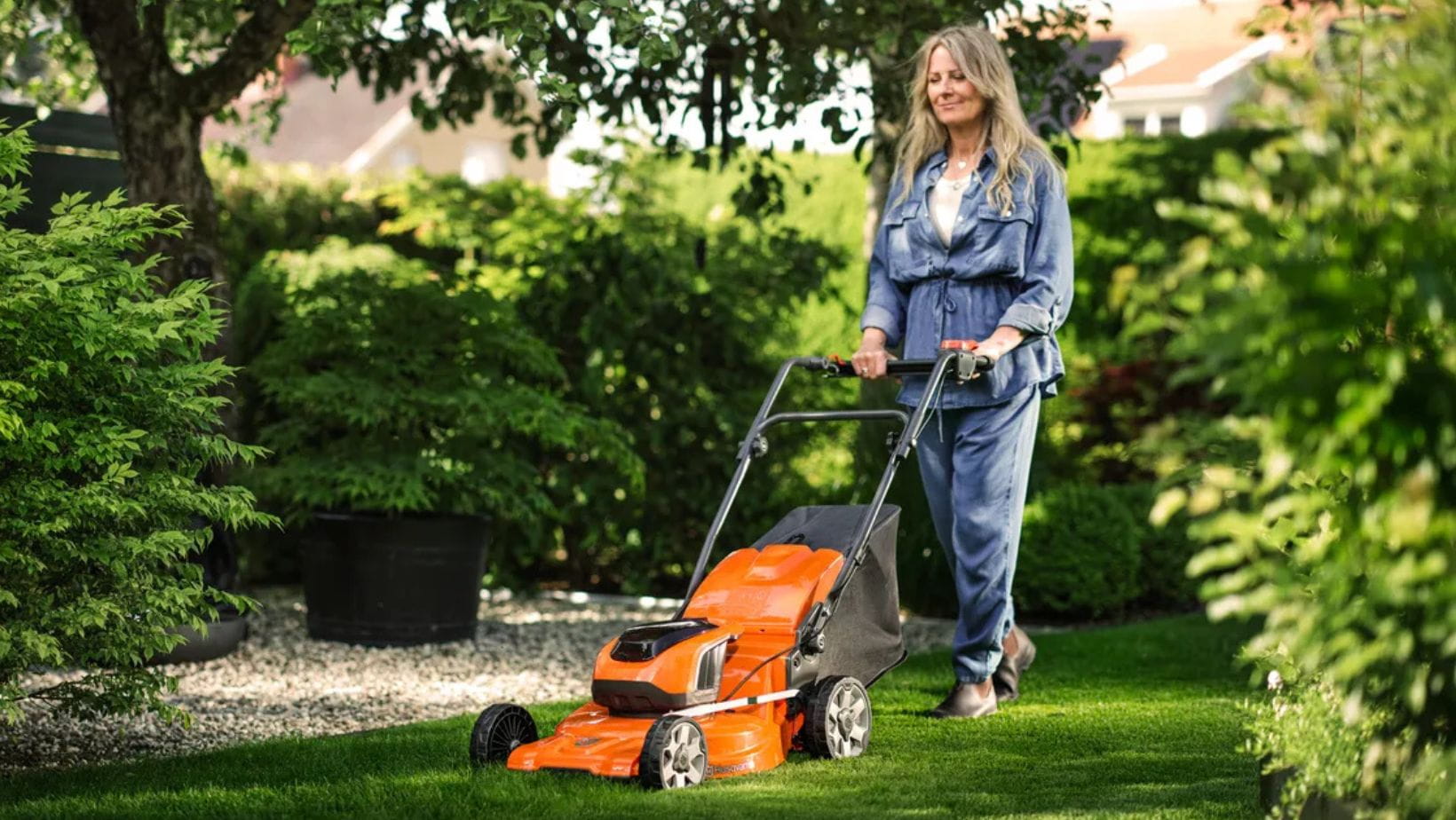
Cordless battery mowers have become increasingly popular thanks to their quiet operation, low maintenance requirements and freedom from extension cables. They’re available in a wide range of cutting widths and are an excellent choice for many small and medium-sized gardens. Higher-capacity battery systems also make them suitable for surprisingly large lawns.
Electric corded mowers remain an economical solution for smaller gardens where an outdoor power socket is readily available. They’re generally lighter than petrol alternatives and work particularly well with compact and medium cutting widths. However, the cable naturally limits how far you can comfortably mow.
Petrol lawn mowers continue to offer outstanding performance for larger gardens and demanding conditions. Their ability to operate without cables or battery runtime limitations makes them particularly well suited to wider cutting decks and uninterrupted mowing of substantial areas of lawn.
Rather than choosing your power source first, it’s often better to decide on the appropriate cutting width for your garden and then select the battery, electric or petrol model that best meets your needs.
Should You Choose a Push or Self-Propelled Mower?
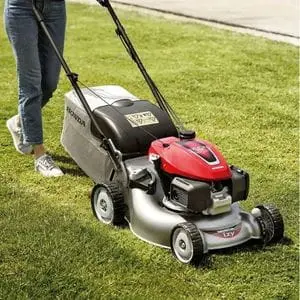 Drive system is another consideration that complements cutting width.
Push mowers are generally lighter and simpler, making them ideal for smaller cutting widths where manoeuvrability is paramount. They’re particularly well suited to relatively flat gardens and compact lawns.
As cutting widths increase, mower weight usually increases too. On larger machines, a self-propelled transmission can make mowing considerably less tiring by driving the mower forwards while you simply guide it.
Self-propelled mowers are especially beneficial on sloping ground or larger lawns, where prolonged pushing would otherwise become physically demanding.
If you choose a cutting width of around 46 cm (18″) and above, you’ll often find that self-propelled models provide a much more comfortable mowing experience, although individual preference and terrain will always play a part too.
Bringing Everything Together
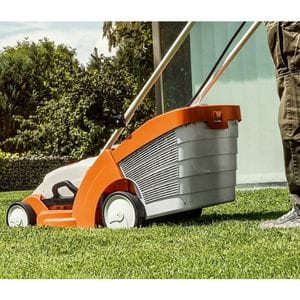 No single measurement can tell you exactly how to choose a lawn mower, because every garden is different.
A compact mower between 30 cm (12″) and 38 cm (15″) is often the best option for smaller lawns with limited storage and numerous obstacles. Medium gardens are generally well served by cutting widths of 40 cm (16″) to 46 cm (18″), offering an excellent balance between efficiency and manoeuvrability. Larger gardens usually benefit from widths over 48 cm (19″), helping reduce mowing time without compromising cut quality.
Alongside lawn size, remember to consider access restrictions, garden layout, storage space, the amount of time you wish to spend mowing, your preferred power source and whether a push or self-propelled mower best suits your property.
Viewed together, these factors form a far more reliable lawn mower buying guide than simply choosing the widest machine available.
Find Your Ideal Lawn Mower Here
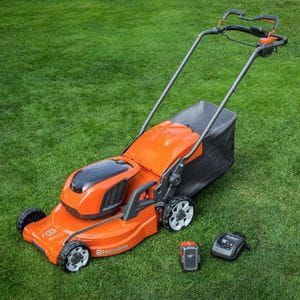 Whether you’re searching for a compact mower for a small urban lawn, a versatile all-rounder for a family garden or a high-capacity machine for extensive grounds, Garden Machinery Direct offers the UK’s best selection of quality lawnmowers—all built by trusted brands, to suit every garden and budget.
On our Lawnmowers category homepage, you can choose to view models based on their cutting width, drive system, power source and other features, helping you narrow down your preferred options. And if you’re still unsure which cutting width or type of mower is right for your needs, please contact our friendly team for further advice.
Whatever the size or layout of your garden, choosing the right cutting width and a lawnmower that’s properly matched to your needs will make every mowing session more efficient, more comfortable and ultimately more rewarding.