
Choosing a leaf blower is about more than just air speed. In this guide, we explain air speed, air throughput and blowing force, and show how these measurements affect real-world performance. Using STIHL blower examples, we help you find the right machine for your garden, while also exploring the benefits of leaf blower vacuums and how suction power is measured.
How to Choose the Right Leaf Blower for Your Size of Garden
A quality leaf blower can save hours of hard work when it comes to keeping your garden tidy. Whether you’re clearing leaves from a lawn, shifting hedge clippings from borders, or removing wood chippings from your patio, having the right machine can make all the difference.
However, comparing blowers isn’t always straightforward. Manufacturers often quote figures for air speed, air throughput and blowing force, leaving many buyers unsure which specifications actually matter. Is a higher air speed always better? Does a more powerful blower necessarily move leaves faster? And how do you know which machine is suitable for your size of garden?
In this guide, we’ll explain the key measurements used for modern leaf blowers, show how they affect real-world performance, and help you choose the best leaf blower for your needs. We’ll also look at how a garden blower and vacuum differs from a standard blower, and explain the measurements used for vacuuming performance.
Why Understanding Leaf Blower Specifications Is Important
 When comparing lawn blower specs, it’s tempting to favour models with the highest numbers you can find. Many people immediately look at air speed because it sounds impressive. But while leaf blower air speed is important, it only tells part of the story.
The reality is that clearing leaves effectively depends on a combination of factors. A machine needs enough airflow to move debris and enough force to keep it moving across the ground. This is why the top manufacturers, like STIHL, place their greatest emphasis on blowing force, which provides a more accurate picture of overall performance.
Understanding the difference between these and other measurements will help you choose a yard blower that matches your own requirements, rather than simply selecting the model with the most eye-catching headline figures.
What Is Leaf Blower Air Speed?
 Air speed measures how fast air leaves the nozzle of a blower. It is usually expressed in metres per second (m/s).
A high air speed helps lift leaves from the ground and dislodge debris trapped in grass, gravel or paving joints. It can also be useful when moving wet leaves that have become compacted.
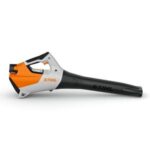
For example, the STIHL BGA 30 is one of our most popular cordless leaf blower models with domestic customers. It has a maximum air speed of 43 m/s, which is more than adequate for clearing dry leaves, dust and light garden debris around smaller outdoor spaces.
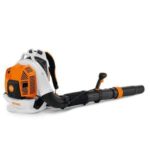
In comparison, the more powerful STIHL BGA 60 increases air speed to 69 m/s, while the professional-level STIHL BR 800 C-E petrol leaf blower reaches an impressive 97 m/s.
At first glance, these figures suggest the BR 800 should outperform the BGA 30 by around twice as much. In reality, the performance difference is far greater, which is where air throughput and blowing force become important.
 Why Air Throughput Matters
Another specification often listed is air throughput, which measures the volume of air passing through the blower. 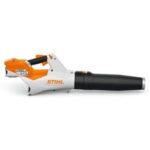 This is typically expressed in cubic metres per hour (m³/h).
Here, the STIHL BGA 30 delivers 430 m³/h, while the BGA 60 manages 780 m³/h. In contrast, the BR 800 C-E produces 1,700 m³/h.
 This is one reason why professional blowers can clear large areas so quickly. They are not only moving air faster but moving much greater quantities of it.
To help you appreciate these figures, a useful comparison is a pressure washer. Air speed is similar to water pressure, while air throughput is comparable to water flow. Blowing force combines both measurements to provide the most complete picture of performance.
What Is Blowing Force?
 Blowing force is measured in Newtons (N) and is widely regarded as the most useful specification for comparing modern blowers.
Unlike air speed alone, blowing force takes into account both the speed of the air and the volume of air being moved. It provides a much clearer indication of how effectively a blower can shift leaves and other debris.
Think of it this way. Air speed determines how fast the air is travelling, while blowing force measures how hard that air is pushing.
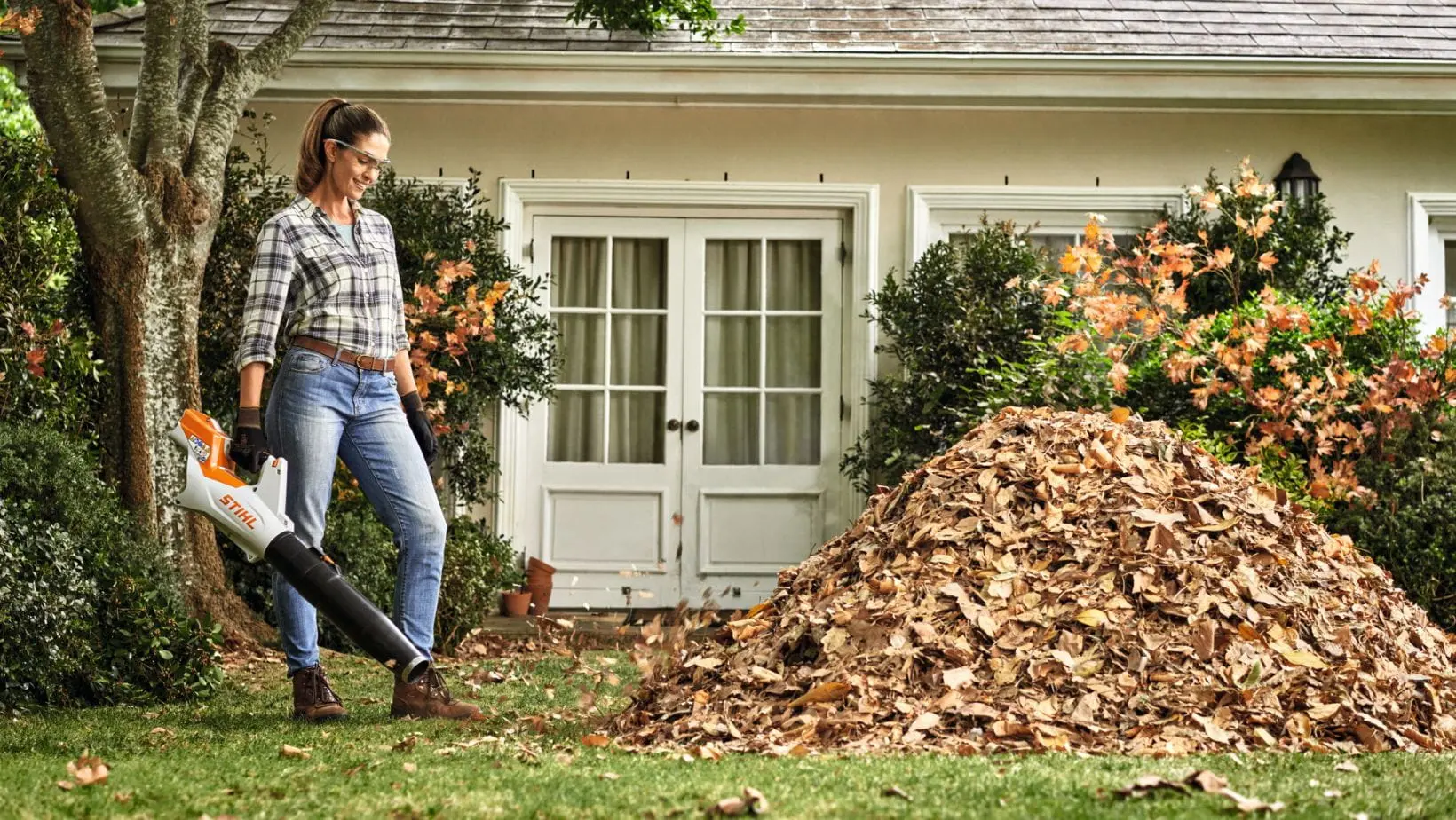
Going back to our examples, the STIHL BGA 30 produces 5 N of blowing force. This makes it an excellent grass blower for routine maintenance in smaller gardens. It is lightweight, easy to handle and ideal for clearing patios, decking and pathways.
The STIHL BGA 60 increases blowing force to 15 N. Although it remains compact and lightweight, it delivers three times the clearing power of the BGA 30. This makes it a great choice for larger gardens, heavier leaf fall and more demanding seasonal work.
Once again, at the top of the range sits the STIHL BR 800 C-E. With a remarkable 41 N of blowing force, this backpack blower operates in an entirely different category. It is designed for professionals who need to clear large volumes of wet leaves, hedge clippings and other heavy debris from extensive areas, quickly and efficiently.
Which Specification Should You Focus On?
 When comparing leaf blowers, blowing force is generally the most useful single figure.
Air speed helps indicate how effectively debris can be lifted and loosened, while air throughput shows how much air is being moved. Blowing force combines these characteristics into a measurement that reflects real-world clearing performance.
A blower with a higher Newton rating will usually clear leaves more effectively than a model with lower blowing force, even if its air speed figure appears similar.
This is why professionals and experienced gardeners tend to use blowing force as their primary comparison tool.
Choosing the Right STIHL Blower for Your Garden
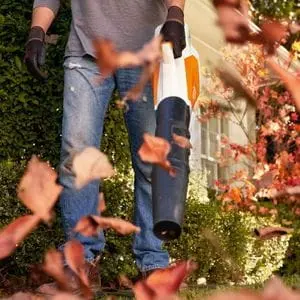 In terms of our examples, for smaller gardens, patios and driveways, a compact cordless leaf blower such as the STIHL BGA 30 is ideal. Its 5 N blowing force provides ample power for regular maintenance while remaining exceptionally lightweight and easy to store.
If you have a medium-sized or larger garden with significant leaf fall during autumn, a model such as the STIHL BGA 60 is likely to be a better fit. Its 15 N blowing force offers a substantial increase in performance without sacrificing manoeuvrability.
For large estates, commercial grounds maintenance, and professional landscaping work, a backpack machine such as the STIHL BR 800 C-E is the most effective solution. Its 41 N blowing force allows operators to clear substantial areas in far less time.
In simple terms, the BGA 30 is an excellent domestic blower, the BGA 60 bridges the gap between domestic and professional use, while the BR 800 is a serious commercial-grade machine.
How a Leaf Blower and Vacuum Differs from a Standard Blower
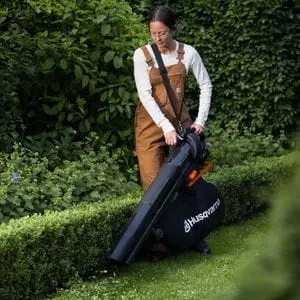 While a conventional blower is designed solely to move leaves into manageable piles, a garden blower and vacuum adds another useful function.
A leaf blower vacuum allows you to collect leaves after gathering them together. Many models also shred the material as it passes through the machine, reducing its volume and making disposal easier.
This makes a garden blower and vacuum particularly appealing for people who want a complete leaf-management solution rather than simply moving debris from one area to another.
In these cases, the STIHL SHA 56 is a great choice for most home gardeners. In blower mode, it produces 8 N of blowing force, positioning it between the BGA 30 and BGA 60 in terms of performance. This gives it enough power to gather leaves effectively while still offering the added convenience of vacuuming and shredding.
Understanding Vacuum Performance Measurements
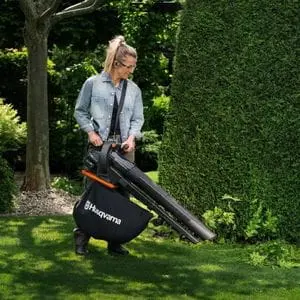 When analysing a combined leaf blower and sucker, you’ll often see different specifications to those used for machines that are purely blowers.
Although blowing force remains relevant, vacuum performance is usually measured by suction air throughput. This figure indicates the volume of air being drawn through the machine and is typically expressed in cubic metres per hour.
The STIHL SHA 56 offers a suction air throughput of 510 m³/h, helping it collect leaves from most domestic gardens efficiently. It also features a shredding ratio of 10:1, meaning ten bags of leaves can be reduced to roughly one bag of shredded material. This significantly reduces the amount of waste you need to handle.
For many homeowners, a leaf blower vacuum offers the best of both worlds. It allows you to gather leaves quickly and then collect them without needing to buy additional tools.
Find the Right Leaf Blower and Vacuum Here
 Whether you’re searching for a lightweight cordless leaf blower for a small garden, a powerful petrol leaf blower for commercial work, or a versatile garden blower & vacuum to handle seasonal leaf clear-ups, Garden Machinery Direct has a machine to suit your needs.
As the UK’s number one supplier of leaf blowers, we stock all STIHL garden blowers and vacuums, alongside machines from the world’s other leading manufacturers.
And if choosing the right blower from such an extensive collection still feels overwhelming, our experienced team are always on hand to help. They can offer practical advice and recommend the most suitable blower or leaf blower vacuum for your garden, estate or professional workload.
Browse our complete range of leaf blowers and garden vacuums today and discover why gardeners, landscapers and grounds-care professionals across the UK trust Garden Machinery Direct for premium leaf blowers, expert advice and outstanding customer service.