
How much grass a cordless lawnmower can cut on one charge depends on its design, battery capacity and the conditions in your garden. Long or wet grass, low cutting heights, slopes and self-propelled drive can all reduce battery run time. Manufacturer mowing-area figures are therefore best treated as a guide. Choosing the right mower and battery combination, maintaining a sharp blade and mowing regularly will help you make the most of every charge.
How Much Grass Can a Cordless Mower Cut on One Charge?
Cordless lawnmowers have transformed the way many of us look after our lawns. Quiet, clean and convenient, they provide the freedom of petrol without the noise, fumes or maintenance jobs associated with an engine. Modern battery technology has also come a remarkably long way, making cordless machines suitable for much larger gardens than was once the case.
But if you’re thinking about making the switch, there’s one question you’re almost certain to ask: how long does a cordless mower’s battery last on a single charge?
Unfortunately, there isn’t a single figure that applies to every machine. A compact mower designed for a small urban lawn has very different energy requirements from a wide-deck, self-propelled model built to tackle more expansive areas of land. Battery size matters too, as does grass length, cutting height, moisture levels and the gradient of your garden.
While manufacturers’ recommended mowing areas provide a useful starting point, understanding what affects battery lawn mower run time will help you choose the right model and get the most from every charge.
How Much Lawn Can a Cordless Mower Actually Cut?
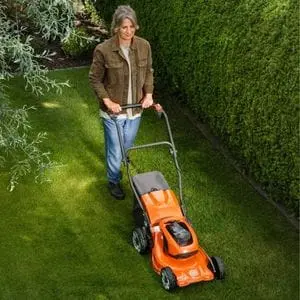 Depending on the machine, cordless lawnmowers can be designed for anything from compact gardens to lawns covering many hundreds of square metres. Some premium models can tackle particularly substantial areas when paired with suitable batteries.
It’s therefore important to check the manufacturer’s recommended cutting area for the particular mower and battery combination you’re considering. If a manufacturer states that a mower can cut ‘up to 500 m²’, for example, this provides a useful indication of its capabilities.
However, it shouldn’t be taken as a guarantee that you’ll mow precisely 500 m² every time.
Real gardens aren’t laboratories. Grass grows at different rates, lawns contain slopes and obstacles, and British weather ensures turf isn’t always perfectly dry. All these factors can influence how much work your battery powered mower completes from a charge.
Understanding Lawn Mower Battery Capacity
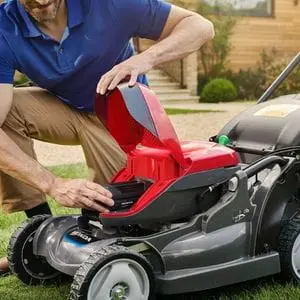 Battery capacity is commonly expressed in amp-hours (Ah). When comparing batteries operating at the same voltage, a higher Ah figure generally means more stored energy is available and, therefore, potentially a longer working time.
For example, if the same mower can use 4 Ah and 8 Ah batteries from one voltage system, the 8 Ah battery stores approximately twice as much energy. Under comparable conditions, this can provide considerably more mowing time.
However, amp-hours don’t tell the whole story.
When comparing batteries with different voltages, watt-hours (Wh) provide a more meaningful indication of stored energy. You can calculate this by multiplying battery voltage by its amp-hour capacity.
A 36 V 5 Ah battery contains approximately 180 Wh of energy, while a 56 V 5 Ah battery contains around 280 Wh. Both have the same 5 Ah rating, yet they don’t store the same amount of energy.
For this reason, lawn mower battery capacity should always be considered alongside voltage, mower design and manufacturer guidance.
Why the Mower Matters as Much as the Battery
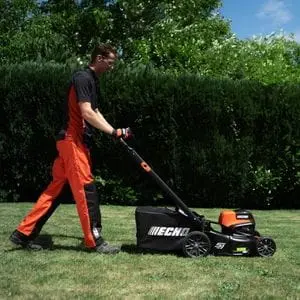 Fitting a large battery to a cordless lawnmower doesn’t automatically tell you how much grass it will cut. The machine has its own energy requirements, with motor design, cutting width, blade system, electronics and drive mechanism all influencing power consumption.
A lightweight push mower with a narrow deck may use less energy while running than a larger, more powerful machine. However, the larger mower can cover more lawn with each pass, so it may still be more productive.
This is particularly important when searching for the best battery lawn mower for your garden. Rather than simply choosing the biggest battery, consider the complete mower and battery combination.
Some cordless mowers also automatically adjust motor performance according to cutting conditions. When they encounter thicker grass, they can increase power to maintain performance. This is useful technology, but the additional output naturally consumes more energy.
Does Self-Propulsion Reduce Runtime?
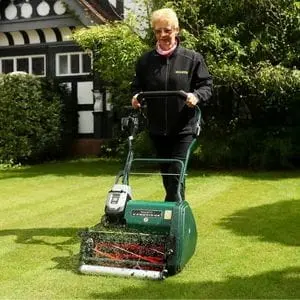 Self-propulsion can make mowing significantly easier, particularly on larger lawns, slopes or when using a heavier machine. Instead of you providing all the forward effort, the mower uses a powered drive system to turn its wheels.
On a cordless mower, the battery may therefore be supplying energy to both the cutting deck and drive system.
Using self-propulsion can consequently affect battery lawn mower run time. The extent will depend on the machine, selected drive speed and terrain. Travelling across level ground doesn’t require the same effort as repeatedly driving uphill.
For many larger gardens, the added comfort of self-propulsion makes it extremely worthwhile. You simply need to account for the drive system when considering likely battery performance.
Grass Length and Cutting Height Make a Difference Too
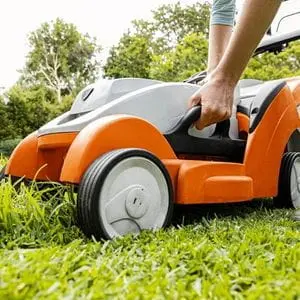 One of the greatest influences on cordless mower battery life is the grass itself.
A regularly maintained lawn generally requires less effort to cut. If you’re simply removing the top section of growth during your usual mow, the blade encounters relatively modest resistance.
Leave the lawn untouched during a spell of warm, wet weather and things can look very different. Long, thick and lush grass means more material for the blade to process, forcing the motor to work harder. Greater workload means increased energy consumption, so you’ll generally cover less ground from a charge.
Your selected cutting height matters too. Setting the deck very low on longer grass dramatically increases the amount of material being removed in one pass.
If a lawn has become overgrown, it’s usually better to begin with a higher cutting position and gradually reduce the height. This places less demand on the mower and is better for the grass than removing excessive growth in one go.
So, when asking how long does a lawn mower battery last in practical use, you need to consider how demanding the grass is to cut, as well as the size of your lawn.
Why Damp Grass Can Reduce Your Mowing Area
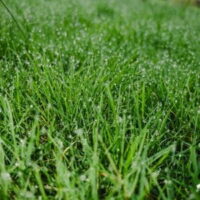 Although mowing damp grass can sometimes be unavoidable, dry conditions are generally preferable.
Wet grass is heavier, tends to clump and can stick to the underside of the cutting deck. Instead of the blade moving freely and efficiently processing dry clippings, the mower can encounter additional resistance. Collecting wet grass may also be more demanding because heavy clippings don’t always travel through the deck and into the collector as easily.
As the workload increases, so does energy consumption. Waiting for drier conditions can therefore help you achieve a cleaner cut while making better use of the available charge.
Slopes, Obstacles and Garden Layout
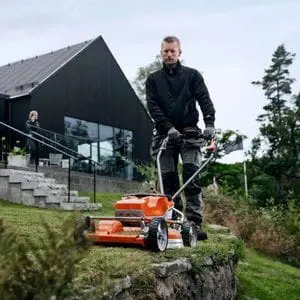 The size of a lawn only tells part of its story.
Imagine two 600 m² gardens. One is completely flat and rectangular. The other has a long gradient, several changes of direction and numerous landscaping features. Despite covering the same area, they can place very different demands on a cordless mower.
Slopes are particularly relevant to self-propelled machines because driving uphill requires additional energy. If your garden contains repeated climbs, real-world coverage may be lower than the maximum figure achieved under more favourable conditions.
Trees, flowerbeds, garden furniture and tight corners can also require additional manoeuvring and overlapping passes.
This is worth remembering when selecting a cordless lawn mower for large garden use. Don’t judge suitability on square metres alone. Think about what those square metres actually look like.
Your Mowing Technique Also Matters
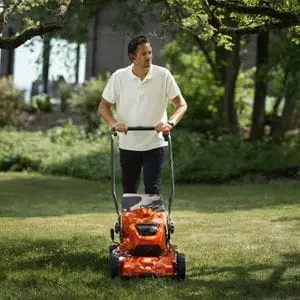 Efficient mowing can help you make better use of the energy stored in your battery.
Excessive overlap between passes means you’re repeatedly cutting areas you’ve already covered. Some overlap helps prevent strips of uncut grass, but repeatedly running a large proportion of the deck over freshly mown ground wastes both time and energy.
If your mower has adjustable self-propelled speeds, the setting you choose can also influence consumption. Similarly, machines offering Eco, Boost or other operating modes may use power differently depending on the selected setting and cutting conditions.
Blade condition also plays a part. A sharp, correctly maintained blade cuts grass efficiently, while a blunt or damaged blade can increase resistance and use up more energy—not to mention leaving a poorer finish.
Keeping the underside of the deck free from excessive accumulations of dried grass is a good way to maintain effective airflow and cutting performance. Always follow the manufacturer’s safety instructions before inspecting, cleaning or maintaining your mower.
Temperature, Battery Age and Long-Term Performance
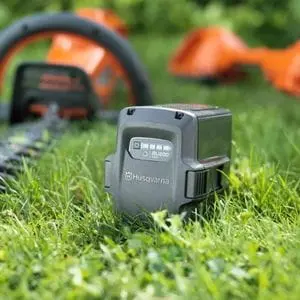 Modern lithium-ion batteries deliver impressive levels of performance, but environmental conditions can affect how they behave.
Very cold temperatures may temporarily reduce available battery performance, while excessive heat is also undesirable. Following the manufacturer’s guidance for charging, use and storage will help protect your battery and maintain its performance.
Age is another consideration. Rechargeable batteries don’t retain their original usable capacity indefinitely. After repeated charge cycles and years of service, gradual capacity loss is normal, so an older battery may provide less runtime than it did when new.
This distinction is important when considering cordless lawn mower battery lifespan because the term ‘battery life’ can refer to how long a mower operates from an individual charge or the battery’s overall service life before its capacity noticeably declines.
Looking after your batteries correctly helps you get the best from both.
Can a Second Battery Increase Your Mowing Range?
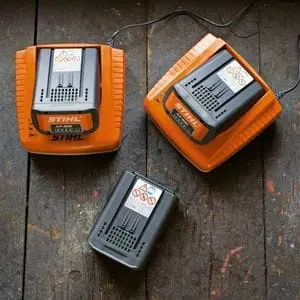 For larger gardens, an additional battery can be a really smart investment. Instead of waiting for one pack to recharge, you can replace it with a charged battery and continue mowing.
Depending on the manufacturer, the same battery system may also power other compatible garden machinery, including hedge trimmers, grass trimmers, leaf blowers and chainsaws. This can make investing in additional batteries even more worthwhile.
Some larger cordless lawnmowers can accommodate multiple batteries at once. Exactly how they use those batteries varies between machines, so always check the individual specification.
If you’re regularly mowing a substantial area, it’s worth considering your complete battery setup rather than concentrating solely on the mower.
So, How Much Grass Can You Cut on One Charge?
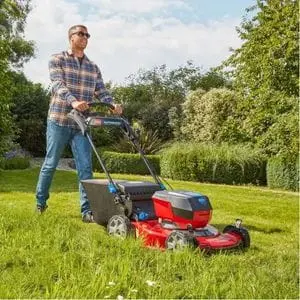 There is no universal answer, which is why recommended mowing area is generally more useful than looking for one standard runtime.
Two machines could run for a similar amount of time but cover different areas because their cutting widths, power requirements and operating characteristics differ. Equally, the same mower can achieve different results from week to week as grass and weather conditions change.
Manufacturer figures remain the most reliable way to compare models, but an ‘up to’ mowing area should always be viewed as a guide rather than a guaranteed result.
For the most realistic assessment, consider the mower model, compatible battery, cutting width, drive system and recommended area alongside your lawn’s grass conditions, gradients and layout.
If your garden is close to a mower’s maximum recommended coverage, it may be sensible to choose a machine with greater capacity. This gives you useful headroom when the grass is longer, thicker or more demanding than usual.
Find the Best Battery Lawnmowers Here
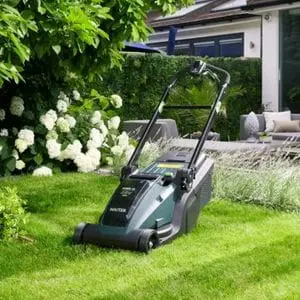 Today’s cordless lawnmowers combine impressive cutting performance with low noise, straightforward operation and the convenience of battery power. With machines now available for everything from compact lawns to substantial gardens, there’s never been a better time to invest in one.
Garden Machinery Direct is the UK’s leading online retailer of cordless lawnmowers, with an extensive choice of machines from some of the industry’s most respected manufacturers. From lightweight models for smaller lawns to powerful machines designed for substantial areas of land, we can help you find a mower that matches your requirements.
We also sell a market-leading range of batteries, chargers and lawnmower accessories, making it easy to build a cordless setup that works for your mower and other compatible products.
And if you’re unsure which mower, battery or charging setup is right for you, our friendly staff are always on hand to offer further advice. With expert guidance and the right cordless lawnmower, you can make every charge count and enjoy outstanding cutting performance.