
If your mower cutting unevenly is ruining the look of your lawn, the cause is often simpler than you think. From dull blades and uneven tyre pressures to wet grass, unlevel decks and poor mowing technique, both pedestrian lawnmowers and ride-on mowers can experience cutting problems over time. This guide explains the most common reasons behind uneven grass cutting and shares practical tips to help rectify the problem, so you can achieve a cleaner, more professional finish.
What Makes Mowers Cut Unevenly and How to Fix It
There’s nothing more frustrating than stepping back after mowing the lawn only to discover patches of long grass, scalped areas, or visible lines running across the surface. A neat, even finish is what every gardener aims for, but achieving it isn’t always as simple as pushing a mower up and down the lawn.
If your lawn mower cutting unevenly has become a regular problem, you’re certainly not alone. Uneven cutting can affect everything from compact pedestrian lawnmowers to large garden tractors and premium ride-on machines. The good news is that most of the causes are straightforward to identify and fix, once you know what to look for.
In this guide, we’ll reveal the most common reasons behind a mower cutting unevenly, explain why it happens, and show you how to restore a cleaner, more professional-looking finish to your lawn.
Dull or Damaged Blades Are One of the Biggest Culprits
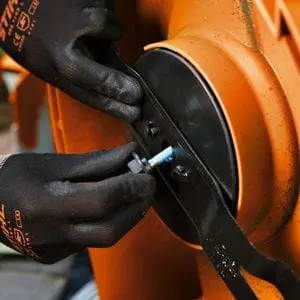 The cutting blade is the hardest-working part of any mower, so it’s no surprise that it’s often responsible for uneven grass cutting. Over time, blades become dull through normal use. Stones, sticks, partially concealed roots, and even dry soil can wear the cutting edge down surprisingly quickly.
Rather than slicing cleanly through the grass, a blunt blade tears and rips it. This leaves the lawn looking untidy and inconsistent, with some blades of grass bent over instead of properly cut. You may also notice brown or frayed grass tips a day or two after mowing.
A bent blade creates an even bigger issue. If it becomes warped after striking a solid object, it no longer spins evenly beneath the deck. One side may cut lower than the other, leading to obvious height differences across the lawn.
Regular sharpening helps maintain a crisp cut, while badly damaged blades should be replaced entirely. If your lawnmower’s blades need changing, you’ll find an excellent range of spare rotary blades and mowing cylinders at Garden Machinery Direct.
Uneven Tyre Pressure Can Tilt the Entire Machine
This is particularly common on ride-on mowers. If one tyre loses pressure, even slightly, the mower deck tilts with it. As a result, one side cuts lower than the other.
When someone has a riding mower cutting unevenly, they’re often surprised to discover that tyre pressure is the cause. After all, it can be an easy thing to overlook, especially if the machine appears to be driving normally.
This issue is especially noticeable on larger, more premium machines, which are engineered for extremely precise cutting. So, if your STIGA, Mountfield, or Husqvarna riding mower cutting unevenly has suddenly become a problem, it could simply be a minor tyre imbalance affecting the finish.
Checking tyre pressures regularly is one of the simplest ways to maintain an even cut. Always follow the manufacturer’s recommended PSI levels and ensure both sides match precisely.
Incorrect Height Adjustment Settings
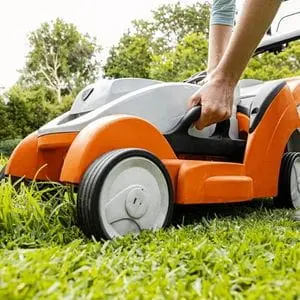 Most pedestrian mowers allow users to adjust cutting height using individual wheel levers or a central adjustment system. Sometimes one wheel ends up set differently from the others, causing the mower to sit unevenly.
The result is immediately visible. One side of the lawnmower cuts shorter while the opposite side leaves slightly taller grass behind.
Before assuming there’s a major mechanical problem, it’s worth checking every wheel setting carefully. On ride-on mowers, the deck lift system should also be inspected to ensure both sides are even.
The Lawn Itself May Be the Problem
Sometimes the mower isn’t entirely to blame. Uneven lawns create a major challenge for any machine, especially if the ground contains bumps, dips, exposed roots, or mole hills.
A lawn mower uneven ground issue often results in scalped patches, where the blade cuts too low over raised areas. Meanwhile, hollows may leave untouched grass behind because the blade cannot reach deeply enough.
This is particularly noticeable during dry summers, when lawns become harder and more compacted.
Raising the cutting height slightly can help reduce scalping on rough terrain. In the long term, lawn levelling and aeration may significantly improve mowing results.
Wet Grass Creates Poor Cutting Conditions
Mowing wet grass rarely delivers a good finish. Moisture causes grass blades to stick together instead of standing upright, which makes it difficult for the mower blade to cut evenly.
Wet clippings also collect underneath the deck, disrupting airflow and reducing cutting efficiency. This often leads to clumps, streaks, and missed patches across the lawn.
If you regularly find your lawn mower cutting unevenly after rain, timing may be the issue rather than the mower itself.
Whenever possible, allow the lawn to dry before mowing. Even a few hours of sunshine can make a noticeable difference to the final finish.
Grass Build-Up Under the Deck
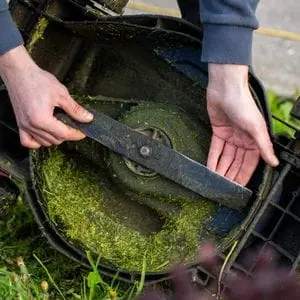 The underside of the mower deck plays a vital role in airflow. As the blade spins, it creates suction that lifts grass upright before cutting it.
As touched on above, when wet clippings and debris accumulate beneath the deck, airflow becomes restricted. Grass no longer lifts properly, causing inconsistent cutting patterns.
Over time, this build-up can become surprisingly thick, especially during periods of rapid grass growth.
Cleaning the underside of the deck after mowing helps maintain optimal cutting performance. Many newer ride-on mowers feature deck wash ports to make this process easier.
Bent or Unlevel Mower Decks
On ride-on machines, the deck itself can sometimes become unlevel. Striking tree roots, kerbs, or uneven terrain may gradually knock the deck out of alignment.
When this happens, one blade sits lower than the other side, resulting in a riding mower cutting unevenly, regardless of where you mow.
Deck levelling is a routine maintenance task on many ride-on mowers and garden tractors. Most manufacturers provide clear measurements and adjustment points within the owner’s manual.
If you own one of these machines and notice it cutting unevenly, checking the deck alignment is one of the first troubleshooting steps worth taking.
Driving Too Fast Reduces Cutting Quality
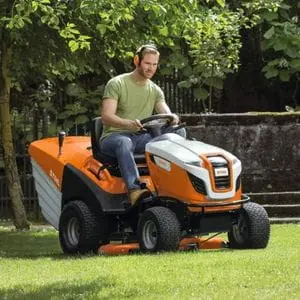 Modern mowers, particularly ride-ons, can cover large areas quickly. However, speed can sometimes work against you.
When travelling too fast, the blade has less time to lift and cut the grass properly. Thick or slightly damp grass becomes even harder to process at higher speeds, resulting in uneven grass cutting and visible trails.
Slowing down often improves results immediately. This is especially important when mowing longer grass or navigating uneven areas of the garden.
Professional groundskeepers frequently vary their speed depending on lawn conditions, rather than mowing at full pace all the time.
Worn Bearings and Spindles
Ride-on mower decks rely on spindle assemblies to support the blades. Over time, bearings can wear out through age or heavy use.
A worn spindle can cause the blade to wobble during operation. This affects cutting precision and may also create vibration or unusual noise from beneath the deck.
In severe cases, the mower may leave obvious strips of uneven grass behind after every pass.
Replacing worn bearings or spindle assemblies restores smooth blade rotation and improves cutting consistency. If you need to do this on your own riding mower, be sure to visit our Spare Parts Finder.
Long Grass Can Overwhelm the Mower
 Trying to cut excessively long grass in a single pass often leads to disappointing results. The mower may flatten some areas instead of cutting them cleanly, leaving patches behind.
This often happens after prolonged wet weather, when grass growth has accelerated.
Rather than cutting the lawn very short immediately, it’s better to mow in stages. Start with a higher cutting setting, then gradually lower it during subsequent passes.
This approach reduces strain on the lawnmower while delivering a cleaner finish overall.
Overlapping Mowing Passes Matters More Than You Think
Many uneven cutting complaints are simply caused by poor mowing technique.
If each mowing pass doesn’t slightly overlap the previous one, narrow strips of uncut grass remain visible between passes. This is especially common when mowing too quickly or turning sharply around obstacles.
Creating a consistent mowing pattern helps improve the lawn’s appearance significantly. Alternating mowing directions between cuts can also encourage healthier, more upright grass growth.
Cylinder Mowers vs Rotary Mowers
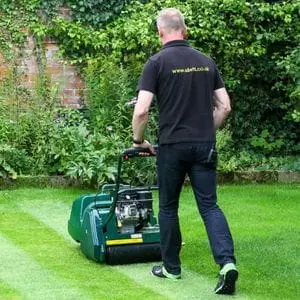 Different mower types handle uneven terrain differently.
Rotary mowers are generally better suited to rougher lawns because their spinning horizontal blade tolerates minor bumps and height variations more effectively.
Cylinder mowers, while capable of producing an exceptionally fine finish, require flatter ground conditions for best results. On uneven lawns, they may scalp raised areas or miss lower sections more easily.
Understanding your mower’s strengths and limitations can help set realistic expectations for the finish it delivers.
Preventing Uneven Cutting in the Future
Most uneven mowing issues develop gradually rather than appearing overnight. Regular maintenance goes a long way towards preventing problems before they become noticeable.
Keeping blades sharp, cleaning the deck regularly, checking tyre pressures, and avoiding mowing in wet conditions all contribute to a healthier lawn and cleaner cut.
Ride-on mower owners should also inspect deck levelling periodically, particularly after working on rough terrain.
Even small adjustments can make a dramatic difference to mowing quality.
Achieve a Smoother, Healthier Lawn with the Right Mower Care
 An uneven lawn cut can make even a healthy garden look untidy, but the underlying cause is usually easier to fix than many people expect. From dull blades and tyre pressure problems to rough terrain and deck alignment issues, most cases of a mower cutting unevenly can be resolved with basic maintenance and careful setup.
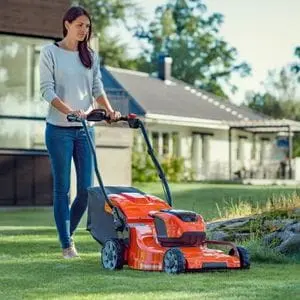
Whether you’re using a compact walk-behind mower or dealing with a riding mower cutting unevenly across a larger lawn, taking the time to inspect your machine properly will almost always improve results.
A well-maintained mower not only delivers a cleaner, more professional finish, but also promotes healthier grass growth and makes lawn care far more enjoyable.