
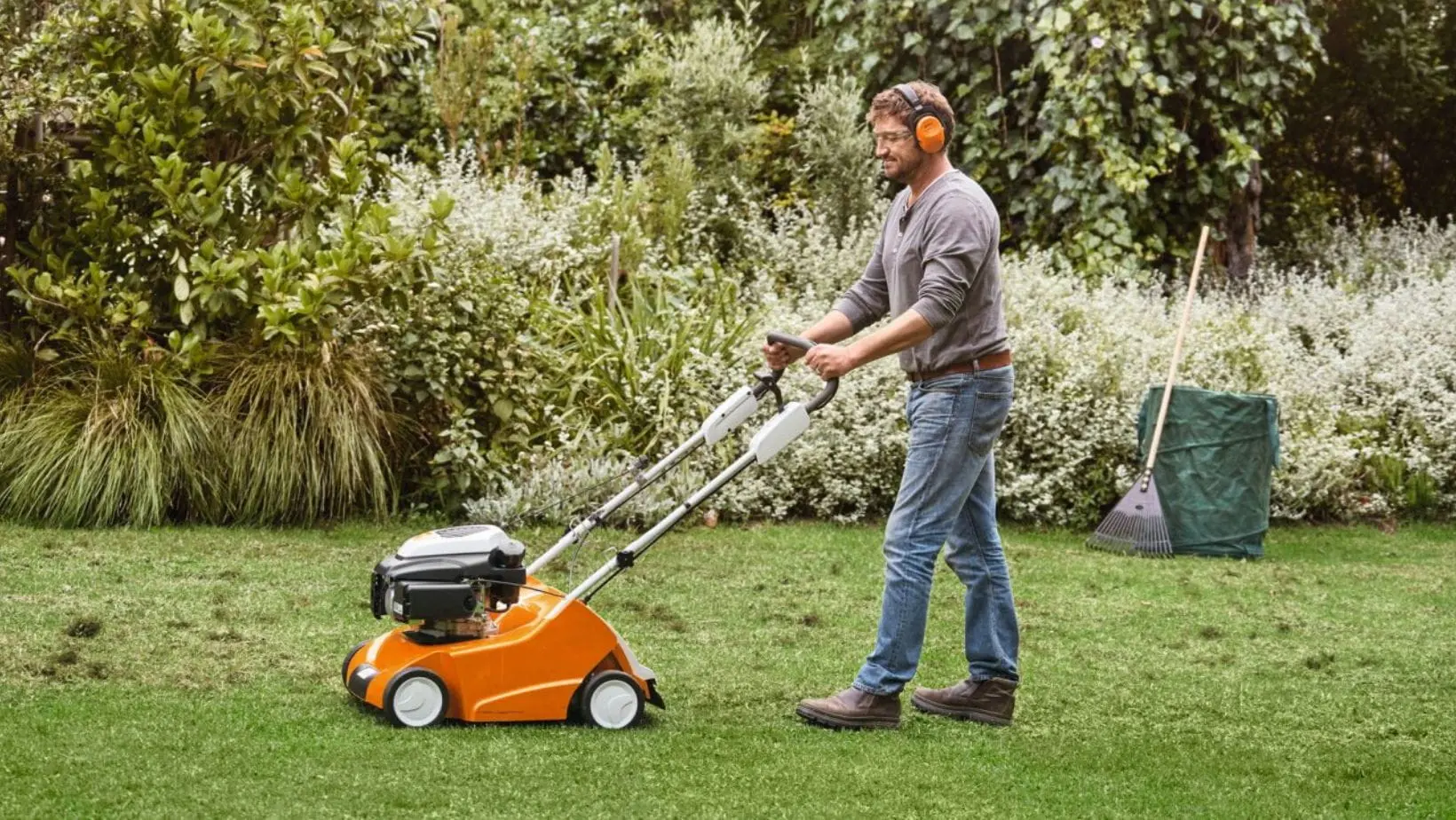
Dethatchers (or lawn rakes), scarifiers, and aerators all improve lawn health, but they do different jobs. Dethatchers remove light surface thatch and moss, scarifiers tackle heavier thatch build-up and moss infestations, while aerators relieve soil compaction to improve drainage and root growth. Understanding the differences will help you choose the right machine for your lawn and achieve thicker, healthier grass all year round.
Dethatchers, Scarifiers and Aerators: Which Do You Really Need?
A healthy lawn doesn’t just happen by accident. Even if you’re mowing regularly, feeding at the right times, and keeping weeds under control, problems can still develop beneath the surface. Thatch can build up, moss can spread, and soil can become compacted, preventing your grass from reaching its full potential.
That’s where specialist lawn care machinery comes in.
If you’ve started researching lawn renovation equipment, you’ve probably come across terms such as dethatcher, scarifier, and aerator. In this guide, we’ll explain the differences between the three machines, when they should be used, and how they can help you achieve a greener, healthier lawn.
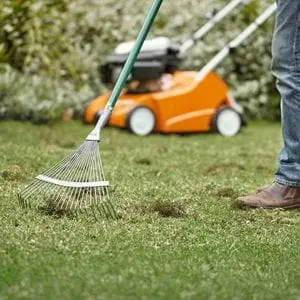 Why Lawn Health Depends on More Than Mowing
Many people assume that regular mowing is all a lawn needs. While cutting the grass is certainly important, it only addresses what happens above ground.
Over time, dead grass, moss, roots, and other organic debris can build up around the base of the grass, forming a layer known as thatch. This can restrict the movement of water, air, and nutrients into the root zone.
At the same time, foot traffic, children’s play areas, pets, and even rainfall can gradually compact the soil. When this happens, grass roots struggle to expand and absorb what they need to thrive.
To tackle these issues, you may need to introduce dethatching, scarifying, or aerification lawn treatments into your maintenance routine.
What Is a Lawn Rake/ Dethatcher?
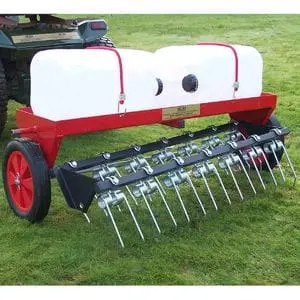 A lawn rake or dethatcher is designed primarily to remove surface thatch, dead grass, and moss from the lawn.
Traditional lawn rakes are manual tools, but powered machines—known as dethatchers—make the job considerably quicker and easier. Many are sold as standalone garden machines, while others are attachments used with a ride-on mower or compact tractor.
Most dethatchers use spring tines that comb through the grass and lift unwanted material to the surface. This allows more sunlight, water, and nutrients to reach the healthy grass beneath.
For many lawns, dethatching forms an important part of annual maintenance, particularly if a layer of thatch has already started to become noticeably visible.
Understanding Scarifiers
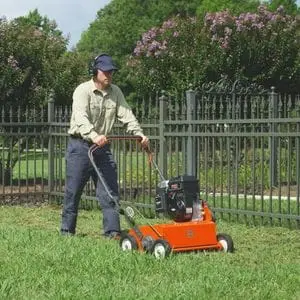 Grass scarifiers are designed to tackle more serious thatch and moss problems.
Where a lawn rake or dethatcher often uses flexible tines, a lawn scarifier typically employs fixed blades or more aggressive metal tines that can cut into the surface of the turf.
The purpose of grass scarification is to remove thick thatch layers and moss that are preventing healthy growth. The aftermath of the process can look dramatic, particularly when carried out on a neglected lawn, but the results are often transformative.
Following lawn scarification, grass plants receive improved access to water, nutrients, and oxygen. This creates better conditions for thicker growth and stronger root development.
If you’re comparing a standard lawn rake with a grass scarifier, think of the latter as a machine for more intensive treatment, designed to address significant build-ups of unwanted material.
Many home gardeners perform lawn care scarifying once a year, typically in early autumn when growing conditions remain favourable and the grass has time to recover.
Electric, Cordless or Petrol Scarifier: Which to Choose?
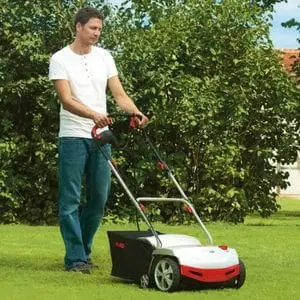 Modern scarifiers are available in cordless, electric, and petrol-powered versions, each offering distinct advantages depending on the size of your lawn and the level of work required.
Electric Scarifiers
An electric scarifier is a popular choice for homeowners with smaller gardens. These machines are lightweight, relatively quiet, and require very little maintenance. Simply plug them in and get to work. They provide enough power for routine lawn renovation tasks and are often more affordable than petrol alternatives.
Battery Powered Scarifiers
Cordless scarifiers offer similar convenience but without the restriction of a cable. Powered by rechargeable lithium-ion batteries, they allow you to move freely around the garden without worrying about extension leads. They’re ideal for properties where access to mains power may be inconvenient and have become extremely capable as battery technology has improved. For many gardeners, a cordless scarifier provides the ideal balance between convenience and performance.
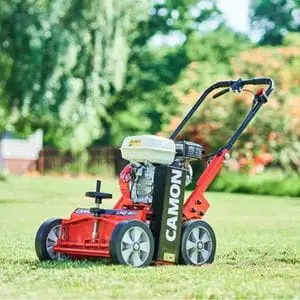 Petrol Scarifiers
For larger gardens or more demanding conditions, a petrol scarifier is sometimes the best option. These machines typically deliver the highest levels of power and are well suited to tackling extensive moss infestations, heavy thatch build-up, and large lawn areas. Because they are not limited by battery runtime or power cables, they’re particularly popular with professional landscapers and grounds maintenance teams.
Ultimately, the right choice comes down to the size of your lawn and how frequently you intend to carry out scarifying. Electric and cordless models are ideal for most domestic users, while petrol machines excel when maximum power and productivity are required. Regardless of the power source you choose, regular scarifying can play a major role in maintaining a healthier, more attractive lawn.
Note Regarding Terminology
While dethatchers are generally considered to provide gentler thatch removal than scarifiers, it’s worth noting that terminology can sometimes vary between manufacturers. British lawncare specialists Allett, for example, market their more aggressive thatch removal cartridges as ‘dethatchers’, with their scarifiers targeted at lighter thatch removal.
This highlights the importance for prospective buyers of checking a machine’s design and intended purpose, rather than relying solely on its name.
What Does a Lawn Aerator Do?
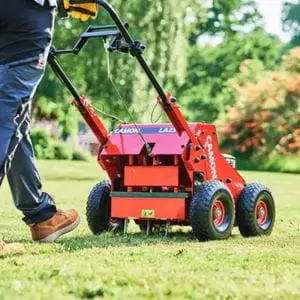 While dethatchers and scarifiers remove material from the lawn surface, a lawn aerator tackles a completely different problem.
Aeration focuses on reducing soil compaction.
When soil becomes compacted, air pockets disappear, making it difficult for roots to access oxygen and absorb moisture. Grass growth can become weak, and drainage often suffers.
A lawn aerator creates holes in the soil, allowing air, water, and nutrients to penetrate deeper into the root zone.
The benefits of regular aeration include improved drainage, stronger root systems, better drought tolerance, healthier grass growth, and reduced surface water after rainfall.
For lawns that feel hard underfoot or remain waterlogged for extended periods, aeration can make a significant difference.
Hollow Tine Aerator vs Spike Aerator
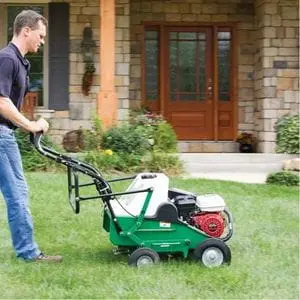 Not all aerators work in the same way.
A spike aerator simply punches holes into the soil using solid tines. While this can improve airflow temporarily, it may also push soil sideways, potentially creating additional compaction around the holes.
A hollow tine aerator, sometimes called a core aerator, removes small plugs of soil completely.
By extracting soil rather than displacing it, a hollow tine lawn aerator provides more effective long-term relief from compaction.
This is why hollow tine machines are widely used on golf courses, bowling greens, cricket outfields, and other professionally maintained turf areas.
If your lawn is built on heavy clay soil or experiences significant foot traffic, a hollow tine aerator is often considered the gold standard for improving soil structure.
Scarifier vs Aerator: Which Should I Choose?
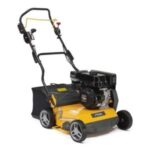 One of the most common questions we’re asked is: which is better – a scarifier or aerator?
The answer depends entirely on the problem you’re trying to solve.
If your lawn contains excessive moss or a thick layer of thatch, a scarifier is likely to deliver the greatest benefit.
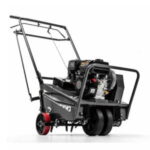 If the soil feels compacted, drainage is poor, or water sits on the surface after rain, an aerator will usually be the better choice.
In reality, these machines are not competitors. They perform different functions and often complement each other.
A scarifier improves conditions at the surface, while a garden aerator improves conditions beneath it.
Many lawn care professionals recommend using both treatments as part of a comprehensive renovation programme.
When Should These Machines Be Used?
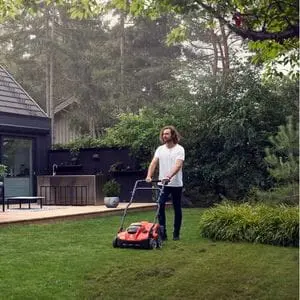 Timing is important if you want to achieve the best results.
Dethatchers and lawn rakes are typically used during spring and autumn when grass is actively growing.
Scarifying is most commonly carried out in early autumn, although light scarifying can also be performed in spring.
Aeration is generally most effective when soil conditions are moist but not waterlogged. Again, early autumn is often considered the ideal time for hollow tine aeration because the grass remains actively growing and can recover quickly.
As a general guide, a lawn rake or dethatcher may be used once or twice per year. Scarifying is commonly performed once a year, particularly on lawns prone to moss. Aeration frequency depends on soil conditions, but compacted lawns often benefit from treatment every couple of years.
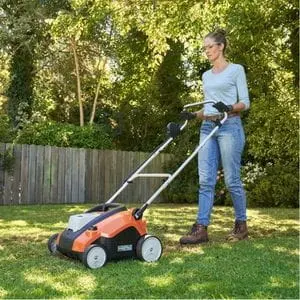 Choosing the Right Machine for Your Lawn
Selecting the right equipment starts with identifying the underlying problem.
If your lawn feels spongy and contains a noticeable layer of dead material, a lawn rake or dethatcher may be sufficient.
When moss has become established and thatch levels are high, a lawn scarifier is likely to provide better results.
Should drainage issues and compaction start affecting growth, a lawn aerator should be your first consideration.
For many lawns, a combination of scarifying and aeration delivers the most dramatic improvements over time.
Your One-Stop Shop for Dethatchers, Scarifiers and Aerators
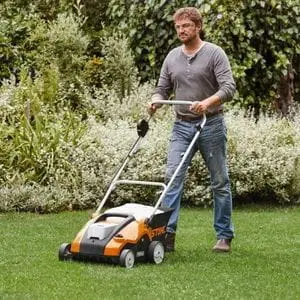 Whether you’re looking for an electric scarifier for a smaller garden, a hollow tine lawn aerator for professional use, or a dethatching cartridge for your cylinder mower, Garden Machinery Direct has you covered.
We sell an exceptional range of dethatchers and scarifiers, along with aerators from some of the most respected names in our industry. Whatever your lawn size, budget, and level of experience, we’ve got the perfect solution for your lawn.
Just as importantly, our approachable staff are always on-hand to help. We understand that every lawn is different, which is why we take the time to provide tailored advice based on your individual requirements.
So, if you’re unsure which machine will deliver the best results for your own lawn, simply get in touch with our friendly team, who will be delighted to assist you in any way they can. We’ll help you choose the right equipment and ensure you’re investing in a machine that genuinely meets your needs.
With so many premium dethatchers, scarifiers, and aerators to choose from, and readily available expert advice, it’s no wonder that both home gardeners and professionals regard us as one of the UK’s most trusted destinations for garden tools and machinery.