
Choosing a petrol water pump for a flooded garden depends on the water type, volume and distance it needs to travel. Dirty water pumps suit muddy conditions, while trash pumps handle larger debris. Compare flow rate, suction head, total head and particle capacity before buying. Also consider hose sizes, portability, fuel consumption and safe operation.
How to Select the Right Water Pump for a Flooded Garden
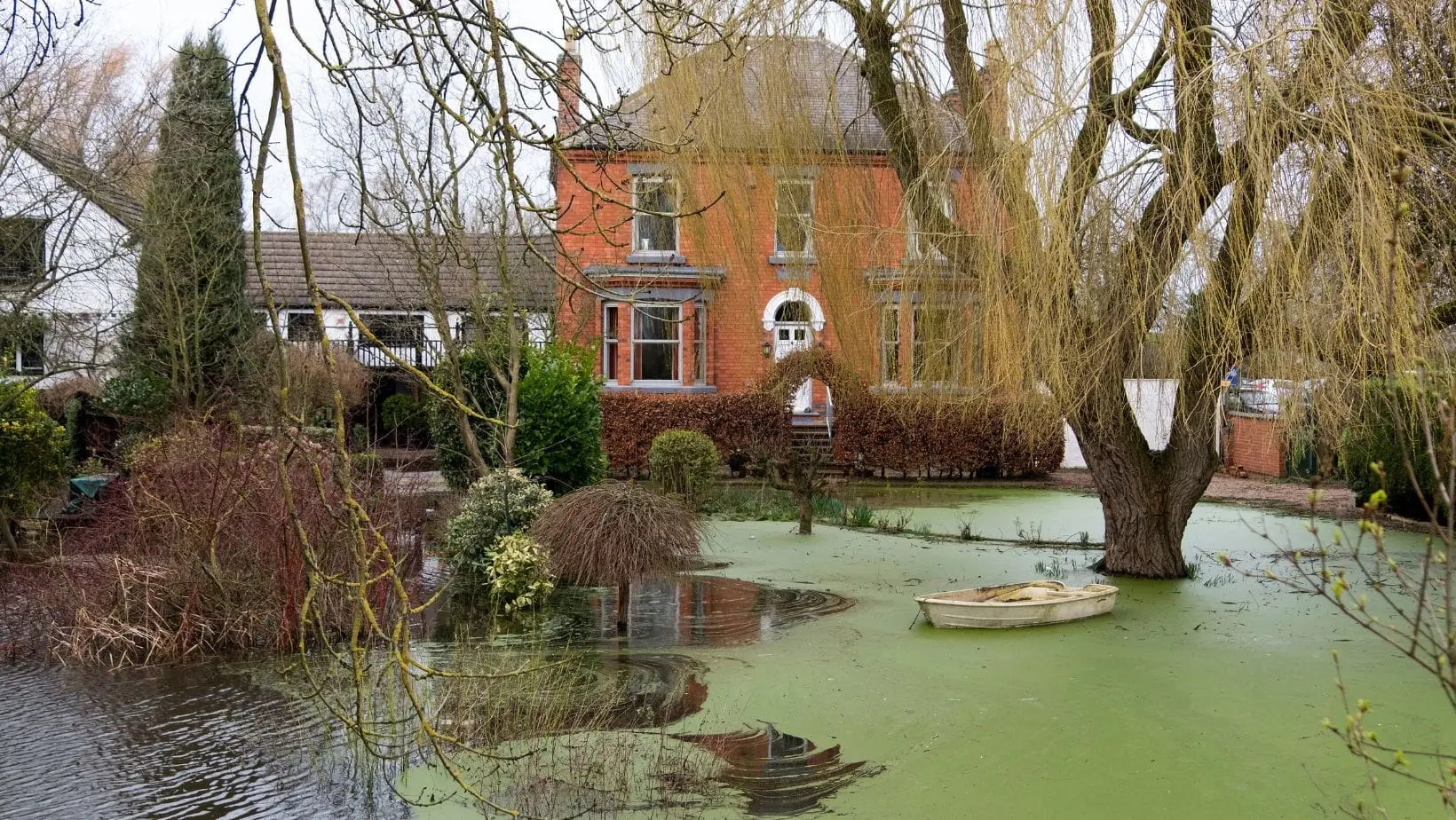
Prolonged heavy rain can leave gardens waterlogged, with standing water collecting on lawns and in low-lying areas. Poor drainage and saturated soil can make the problem worse, leaving parts of your garden underwater for days. If the water isn’t draining away naturally, a water pump can provide an effective way to clear the excess and help restore order in your outdoor space.
A petrol water pump provides an effective way to remove unwanted water and help get your garden back under control. However, not every pump is suitable for every flooding situation. Some are designed for relatively clean water, while others can handle mud, silt, leaves and larger debris.
Choosing the right equipment means looking beyond engine size and advertised pumping capacity. You also need to consider the type of water, the volume you need to move, the distance it must travel and the height it needs to overcome.
In this guide, we’ll explain how to choose a petrol water pump for a flooded garden, covering the main pump types and specifications worth comparing.
Assess the Flooding Before Choosing a Pump
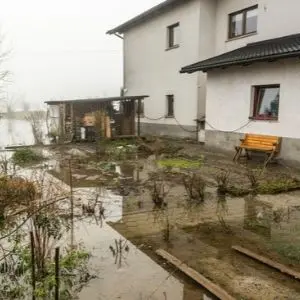 Before buying a water pump for flooding, assess the affected area. Consider how much standing water needs removing and whether it contains soil, gravel, leaves or other debris.
For example, shallow water on a paved patio presents different challenges from a flooded lawn or a waterlogged garden. Water collected in a sunken area may also need to travel uphill before reaching a suitable drainage point.
You should also identify where the discharged water will go. Pumping water away is only helpful if it can drain safely without returning to your garden or affecting neighbouring properties.
If flooding results from a blocked drain, burst pipe or ongoing water supply problem, address the source as well. A pump can remove accumulated water, but it cannot resolve the underlying cause.
Clean Water, Dirty Water or Trash Pumps?
One of the most important decisions is choosing a pump that can handle the water you need to remove. Petrol flood pumps are available in different designs, each suited to particular conditions.
Clean Water Pumps
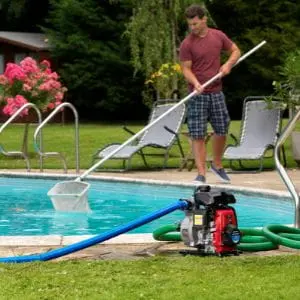 Clean water pumps are designed to move relatively clear water containing minimal solid particles. They are often used for transferring water between tanks, draining swimming pools and supplying irrigation systems.
If rainwater has collected on a clean, paved surface, this type of garden water pump may be suitable. However, clean water models are rarely tolerant of sand, mud and debris.
Using the wrong pump can cause blockages, excessive wear or damage to internal components. If your garden contains muddy floodwater, a different type of pump will usually be more appropriate.
Dirty Water Pumps
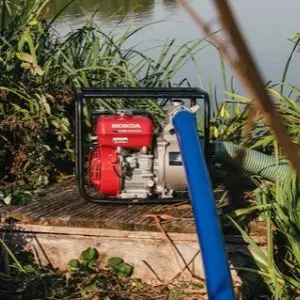 A dirty water pump is designed to handle water containing suspended particles and small solid debris. This makes it a popular choice for domestic flooding situations.
Heavy rain can wash soil, grass cuttings and leaves into standing water. A water pump for dirty water is better equipped to handle these conditions than a clean water model.
However, dirty water pumps still have limits. Each machine has a maximum solid particle size, which determines the size of debris it can process. Check this specification carefully before buying.
A small dirty water pump may be sufficient for occasional flooding in a modest garden. For larger areas or more demanding conditions, a heavy duty dirty water pump with a higher flow rate may be a better investment.
Trash Pumps
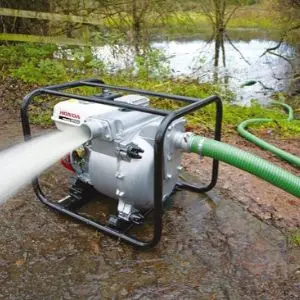 Trash pumps are designed for more demanding applications involving water with larger quantities of solid debris. They are commonly used on construction sites, farms and other locations where muddy water needs moving.
Depending on the model, a trash pump can handle larger solids than a standard dirty water pump. This makes it useful when floodwater contains stones, twigs and substantial amounts of other debris.
However, trash pumps are not automatically the best choice for every flooded garden. They are usually larger and more expensive than other types of water pump. For most homeowners, a suitable dirty water pump will provide all the capability required.
Understanding Flow Rate
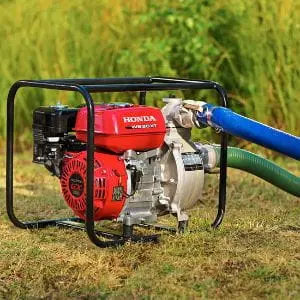 Flow rate is one of the most important specifications when comparing flood and water pumps. It tells you how much water a pump can move within a given period.
Manufacturers usually express flow rate in litres per minute (L/min) or litres per hour (L/h). Some also provide figures in cubic metres per hour (m³/h).
A higher flow rate means a pump can move more water in less time. This is particularly useful when dealing with large volumes of standing water.
However, the advertised maximum flow rate is not necessarily what you’ll achieve in practice. Flow decreases as the pump works against greater resistance, such as a longer discharge hose or a higher pumping height.
Always consider flow rate alongside the pump’s head specifications. Choosing a model based on its headline capacity alone could leave you with a pump that struggles to move water where you need it.
Suction Head: How Deep Can the Pump Draw Water From?
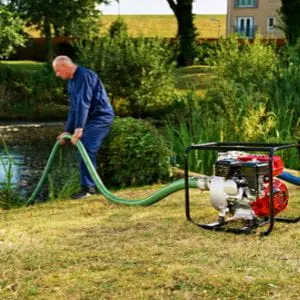 Suction head describes the vertical distance between the water’s surface and the pump’s inlet.
For example, if your petrol water pump sits on firm ground beside a flooded garden, the suction head is the vertical distance from the pump down to the water level. The greater this distance, the harder the pump must work to draw water upwards.
Petrol flood pumps tend to have a maximum suction head of around 7–8 metres, although this varies between models.
However, maximum suction head does not mean the pump will deliver its advertised flow rate at that depth. Performance can reduce as suction distance increases. Long or narrow suction hoses can also restrict the water supply.
Position the pump as close to the flooded area as practical. Keep the suction hose as short and straight as possible to maintain better performance.
Most petrol water pumps also need priming before use. This involves filling the pump casing with water to establish the suction required to begin pumping. Always follow the manufacturer’s instructions.
Total Head: How Far Must the Water Travel?
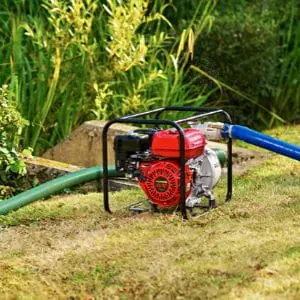 While suction head concerns drawing water into the pump, total head describes the overall height the pump must overcome to move water through the system.
Imagine your garden has flooded in a sunken area. You need to position the pump nearby and discharge the water into a drain at a higher level. The pump must overcome the height difference between the water source and the discharge point.
Manufacturers usually provide a maximum head figure in metres. This indicates the greatest vertical height the pump can theoretically deliver water to, although the flow rate will be very low near this limit. Look at the pump’s detailed specification. This should reveal how its flow rate changes at different pumping heights.
Remember that discharge hose length also matters. Longer hoses create additional friction, which can reduce the amount of water delivered.
Choosing the Right Hoses and Connections
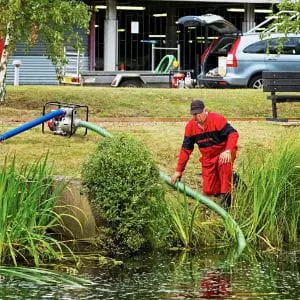 Even a powerful petrol water pump needs suitable hoses to work effectively. The wrong diameter or an unsuitable hose can restrict water movement and reduce performance.
Most pumps use separate suction and discharge hoses. The suction hose draws water into the pump, while the discharge hose carries it away from the affected area.
A reinforced suction hose is essential. Unlike an ordinary garden hose, it is designed to resist collapsing under the vacuum created when the pump draws water. It should also have secure fittings and a suitable strainer to prevent unwanted debris entering the pump.
A dirty water pump hose must be suitable for the type of water being moved. Check the manufacturer’s recommendations for the correct hose type and diameter.
The discharge hose should also be wide enough to accommodate the pump’s output. A narrow hose can create unnecessary resistance, particularly when moving large volumes of water over longer distances.
Other Factors to Consider
Flow rate, suction head and total head are essential specifications, but several other considerations can help you choose the right model.
Engine Power and Performance
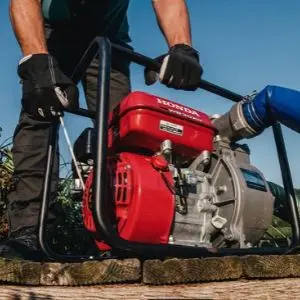 Petrol water pumps use an engine to drive an impeller, which creates the pressure needed to move water. Engine power is important, particularly if you expect to use the pump regularly or tackle substantial flooding.
A compact model may provide sufficient performance for occasional domestic use. Larger gardens and more demanding applications may call for a higher-capacity pump.
However, engine size alone does not determine performance. Pump design, impeller construction and overall specifications are equally important.
Portability and Weight
Consider where you will use the pump and how easily you can move it into position.
A compact model is easier to move and store, making it a practical choice for homeowners with limited space. Larger pumps may offer greater capacity but can be more difficult to manoeuvre.
Some models feature carrying frames or handles to make transportation easier.
Solid Handling Capacity
If you’re choosing a water pump for dirty water, pay close attention to its maximum particle size. This specification is normally given in millimetres and indicates the largest solid particles that can pass through the pump.
A larger clearance can be useful when dealing with muddy water containing small stones, leaves and other debris. However, never assume every dirty water pump can handle the same material.
Remove bulky debris before pumping and avoid exceeding the manufacturer’s stated limits.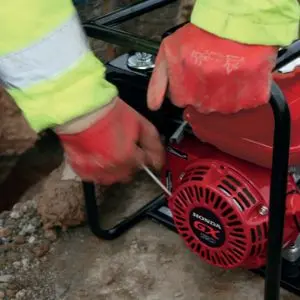
Fuel Consumption and Maintenance
These factors will affect running costs, particularly if you need to pump water for several hours, so check the engine’s specifications and the fuel tank capacity.
Look for accessible priming and drainage points, as these make routine maintenance easier. After use, clean away mud and debris, drain the pump as instructed and follow the manufacturer’s storage advice.
Petrol pumps must only be operated outdoors in well-ventilated areas. Never run one inside a garage, shed or other enclosed space, as engine exhaust fumes contain dangerous carbon monoxide.
What Type of Petrol Water Pump Is Best for a Flooded Garden?
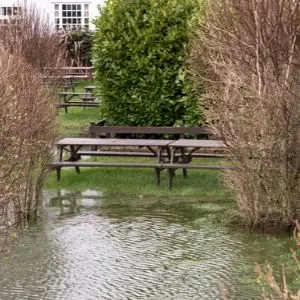 The right choice depends on the conditions in your garden and how much water you need to remove.
For relatively clean standing water, a clean water pump may be suitable. For muddy garden floodwater, a dirty water pump is generally the better option. If the water contains larger debris, a suitable trash pump may be necessary.
For occasional flooding in a modest garden, a small dirty water pump should provide sufficient capacity without taking up too much storage space. Larger gardens and substantial flooding may call for a heavy duty dirty water pump or trash pump with a higher flow rate.
Above all, match the pump to the conditions rather than simply buying the largest model available. Consider the water type, particle capacity, flow rate and pumping height before making your decision.
Find the Right Petrol Water Pump at GMD
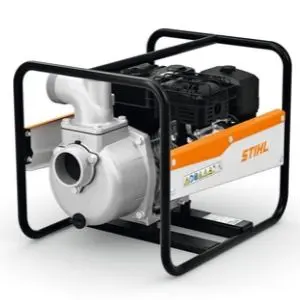 A flooded garden can be stressful, particularly when heavy rain leaves large areas underwater. Having the right equipment can make removing standing water much quicker and easier.
Choosing a suitable petrol water pump involves more than comparing engine sizes and maximum flow rates. You need to consider the type of water, solid particle capacity, suction head, total head and the distance the water must travel.
At Garden Machinery Direct, we sell a superb range of petrol water pumps for domestic, professional and agricultural applications. Whether you need a compact garden water pump for occasional use or a more powerful model for demanding conditions, we have options to suit your requirements.
Our friendly staff are always on hand to offer further expert advice when choosing a pump. If you’re unsure which model, hose or accessories would best suit your needs, please get in touch. We’ll be happy to help you find the right equipment to tackle unwanted water and get your garden back in shape.