
A single robot mower can maintain two or more separate lawns, but the level of automation depends on their layout and the mower's capabilities. Connected lawns may be managed automatically, while disconnected areas often require manual transfer of the machine. This guide explains multiple mowing zones, secondary areas, narrow passages, and how wired and wire-free robotic mowers handle them.
Can a Robot Mower Manage Two Separate Lawns?
Robotic lawn mowers offer a convenient way to keep grass looking its best with minimal effort. But what happens when your garden has more than one lawn? Perhaps your front and back gardens are separated by the house, or a driveway divides two grassed areas. Can a robot mower manage two separate lawns, or will you need a different machine for each one?
The good news is that many modern robotic mowers can maintain multiple mowing zones. Some travel between lawns automatically, while others need a little help from their owners. Much depends on the garden’s layout, the mower’s navigation system, and whether the grassed areas are physically connected.
In this guide, we’ll explain how robot mowers handle separate lawns, paths, narrow passages, and secondary areas. We’ll also compare wired and wire-free systems to help you understand which robot mower might suit your property.
Can One Robot Mower Cut Two Different Lawns?
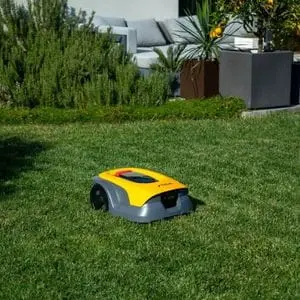 Yes, a single robotic lawn mower can maintain two or more separate lawns, provided the model supports the required arrangement. However, there’s an important difference between a lawn robot that works in several areas and one that travels between them without assistance.
For example, if your front and rear lawns are linked by a suitable grass passage, some robot mowers will move between them automatically. They may even follow individual mowing schedules for each lawn.
If the house completely separates the two areas, things become more complicated. Without a suitable connecting route, the mower cannot travel between them independently. In this case, certain models allow the owner to carry the machine between lawns and start it manually.
How Do Robot Mowers Manage Multiple Mowing Zones?
A mowing zone is a defined area of grass that a robotic mower is programmed to maintain. Depending on the machine, these zones may be established using physical boundary wires or virtual boundaries created through an app.
Multiple zones are particularly useful when different areas have different maintenance requirements. For example, a sunny front lawn might grow faster than a shaded rear garden, and so require cutting more frequently.
Advanced robotic mowers allow owners to establish separate mowing schedules for different zones. Some also support individual cutting heights and mowing patterns. However, these features vary between models, with simpler machines offering less precise zone management.
It’s also worth remembering that multiple zones don’t necessarily mean separate lawns. A large, continuous garden can be divided into several mowing areas, even when no physical barriers exist.
What Happens When Two Lawns Are Completely Disconnected?
Disconnected lawns present one of the biggest challenges for robotic mowing. These are areas with no suitable route between them, perhaps because they’re separated by buildings, walls, steps, or locked gates.
Fortunately, this doesn’t always mean buying two robotic mowers. Certain models support what’s known as a secondary area, allowing the machine to maintain grass that it cannot reach independently.
Using a Secondary Mowing Area
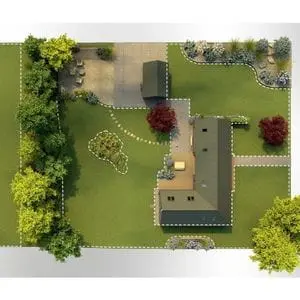 A secondary area is a separate section of lawn that requires the owner to transport the mower there manually.
For example, you might have a robot mower operating from a charging station in your rear garden. When the front lawn needs attention, you carry the machine there and select the appropriate mowing mode.
The mower then cuts the grass within its designated boundaries. Depending on the model, it may stop when its task is complete or continue until its battery needs charging.
Because there’s no accessible route back to the charging station, the owner must collect the machine and return it manually.
This arrangement works particularly well when the secondary lawn is relatively small or requires less frequent mowing. However, secondary-area support isn’t universal, so it’s important to check the manufacturer’s specifications before purchasing a suitable machine.
Can You Use Two Charging Stations?
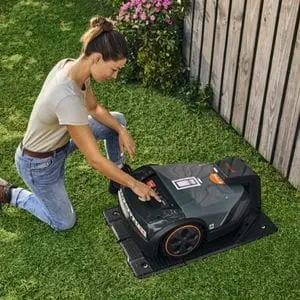 Yes, certain robotic mowers can operate with more than one charging station, although this depends on the model.
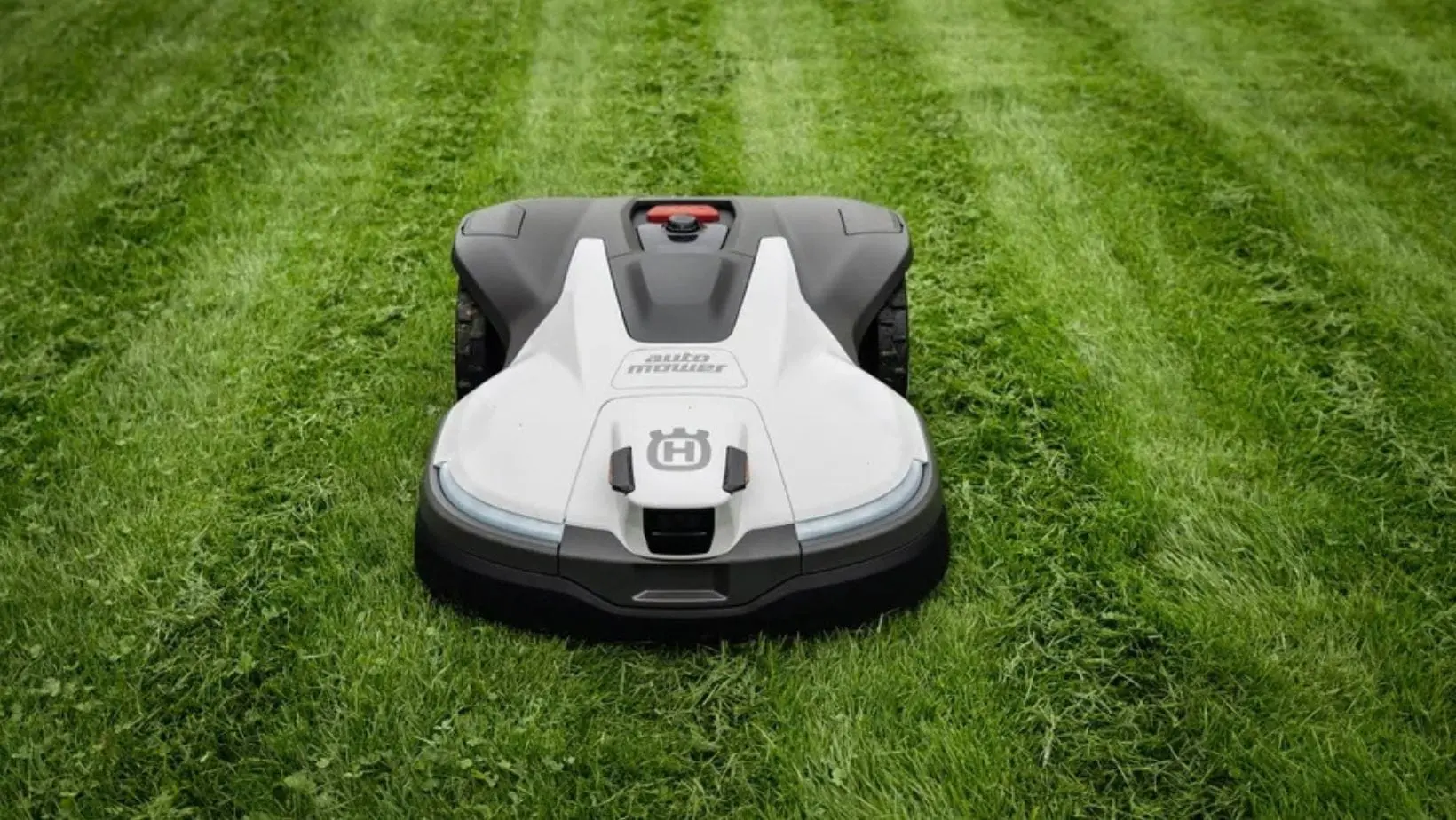
For example, compatible Husqvarna Automower models feature a Profiles function, allowing owners to save settings for several separate installations. Each lawn can have its own charging station and boundary-wire or wire-free setup.
This means a homeowner could use the same robotic mower in their front and rear gardens, manually transferring it between the two areas. Once the appropriate profile is selected, the auto mower can operate and recharge at that location.
Some Husqvarna Automower models support up to 10 separate installations, making this a particularly flexible option for properties with disconnected lawns.
However, multiple charging stations aren’t supported by every robotic mower, so always check the manufacturer’s specifications before planning this type of installation.
Can Robot Mowers Cross Paths and Driveways?
A paved path or driveway doesn’t necessarily prevent a robotic mower from maintaining lawns on either side. Many models are capable of travelling across suitable hard surfaces, provided the route meets the manufacturer’s requirements.
With a wired system, the boundary cable must be installed in a configuration that allows the mower to cross safely. Wire-free models may instead use a programmed transport route, allowing them to move between mapped mowing zones with their blades switched off.
In either case, the surface should be reasonably level and free from obstacles. Raised kerbs, steps, and steep gradients may prevent the mower from completing the journey.
Driveways require particular care because of passing vehicles and pedestrians. Any crossing must be compatible with the mower’s specifications and safe for its intended use.
Can Robot Mowers Navigate Narrow Passages?
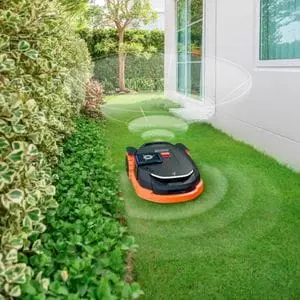 Narrow passages are common in British gardens, particularly where lawns are linked by strips of grass between fences, flowerbeds, or buildings.
Many robotic mowers are designed to negotiate these spaces, although minimum passage widths vary between models. Some wired machines use guide wires to find their way through restricted areas, while compatible wire-free systems follow mapped routes.
However, width isn’t the only consideration. Sharp turns, uneven surfaces, and steep slopes may also affect whether a passage is viable.
It’s worth remembering that an auto mower’s ability to travel through a narrow corridor doesn’t guarantee it will cut all the grass within it. This is another reason to check the machine’s specifications before making your purchase.
Wired vs Wire-Free Robot Mowers: Which Is Better for Multiple Lawns?
Both technologies offer effective lawn maintenance, but they differ in installation, flexibility, and how easily mowing areas can be changed.
How Wired Robotic Mowers Work
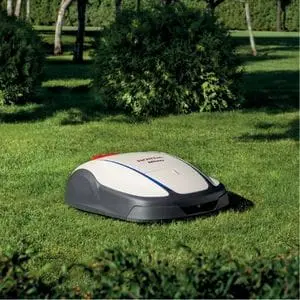 Wired robot mowers use a physical boundary cable to establish their working area. Once installed, this provides a consistent signal that helps keep the machine within the lawn.
For properties with several mowing zones, compatible systems may incorporate guide wires to help the robot mower travel between connected areas. Certain models also support secondary lawns, although these require a suitable boundary-wire arrangement and manual transfer of the machine.
Wired systems are often more affordable than comparable wire-free alternatives. They also avoid the satellite reception problems that affect some wireless models.
However, installing cables around a complicated garden can be time-consuming. Future changes to the lawn’s layout may also require adjustments to the wiring.
How Wire-Free Robotic Mowers Work
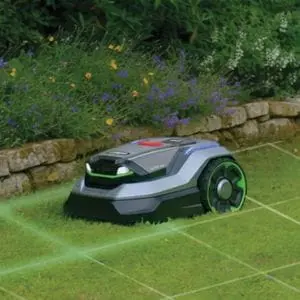 Wire-free robot mowers replace physical boundary cables with digital mapping. Depending on the model, they use technologies such as RTK satellite positioning, AI cameras, or LiDAR to establish their location.
One of their main advantages is flexibility. Compatible models allow owners to create individual mowing zones, adjust virtual boundaries, and manage different cutting schedules through an app.
Some also support isolated mowing areas, making them particularly useful for properties with disconnected lawns. However, the ability to maintain separate areas doesn’t necessarily mean the mower can travel between them independently.
Wire-free models generally cost more to purchase, although they eliminate the need for perimeter cable installation.
Are Wire-Free Mowers Always Better?
Not necessarily. While wire-free systems offer convenient zone management, their suitability depends on the garden’s layout and surrounding environment.
For example, satellite-based machines may struggle to maintain accurate positioning near tall buildings or beneath dense tree cover. Models equipped with cameras or LiDAR have different operating requirements and limitations.
A wired mower may therefore be a better choice for a straightforward garden where satellite reception is unreliable.
Wired vs Wire-Free: A Quick Comparison
| Feature | Wired Robot Mowers | Wire-Free Robot Mowers |
|---|---|---|
| Boundary System | Physical perimeter cable | Virtual boundaries |
| Installation | Boundary wiring required | Mapping and system setup required |
| Multiple Mowing Zones | Available on certain models | Often more flexible |
| Disconnected Lawns | Secondary-area support on certain models | Isolated-area or multi-map support on certain models |
| Crossing Paths | Suitable boundary and guide wire arrangements | Virtual transport routes on compatible models |
| Narrow Passages | Model dependent, sometimes using guide wires | Model dependent, using digital navigation |
| Changing Mowing Areas | May require cable adjustments | Usually managed through an app |
| Purchase Price | Generally lower | Generally higher |
| Main Consideration | Boundary wire installation and maintenance | Satellite reception or navigation requirements |
Does the Size of Each Lawn Matter?
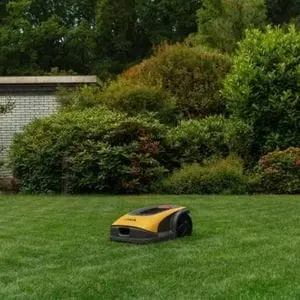 Yes. When choosing a robot mower for multiple lawns, it’s essential to consider the total area requiring maintenance.
Suppose your rear lawn measures 800 m² and your front lawn covers another 300 m². Together, they represent 1,100 m² of grass. You should therefore choose a mower with sufficient capacity to maintain the combined area, rather than selecting one based solely on the larger lawn.
However, advertised mowing capacity isn’t the only factor. Complex layouts, slopes, obstacles, and travel between zones may all affect how efficiently the machine works.
Battery endurance deserves attention too, particularly if one lawn is isolated from the charging station. If the mower cannot complete its secondary area on one charge, you may need to return it to the charging station before the work is finished.
Is One Robot Mower Better Than Two?
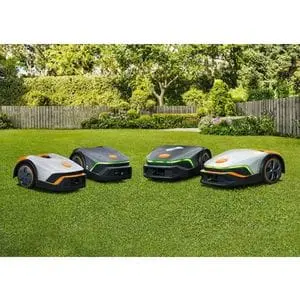 For many households, one robotic mower is the most economical and practical solution.
If the lawns are connected by suitable passages, a compatible machine could maintain them automatically with little owner involvement. Even where manual transfer is necessary, using one robot mower can still save considerable time compared with conventional mowing.
However, two separate robotic mowers might be worth considering when the lawns are large, completely disconnected, or require frequent attention.
For example, a substantial front lawn and an equally large rear lawn might each benefit from a dedicated robotic mower. Both lawn robots could then operate independently, returning to their respective charging stations without assistance.
The disadvantage is the additional purchase cost and the need to maintain two machines.
What Should You Check Before Buying a Multi-Zone Robot Mower?
Before purchasing a robotic mower for two separate lawns, it’s worth assessing the entire garden rather than focusing solely on the grassed areas.
Start by establishing whether the lawns are connected and identifying any obstacles between them. Measure narrow passages, check for raised paths or steps, and consider whether the auto mower would have safe access to its charging station.
Next, think about the size of each lawn and how frequently it needs cutting. If the areas have different maintenance requirements, a robot mower with individual zone schedules may be particularly useful.
It’s also worth considering how much manual involvement you’re prepared to accept. Some homeowners are happy to carry their robotic mower to a secondary lawn occasionally. Others prefer a fully automatic arrangement.
Find Your Ideal Robot Mower at GMD
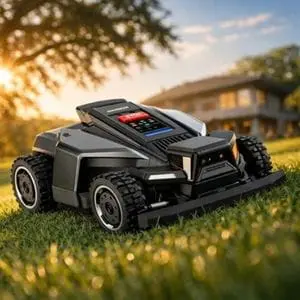 So, can a robot mower manage two separate lawns? Yes, many of them can. Whether your garden has connected mowing zones or completely separate grassed areas, there’s a good chance you’ll find a robotic mower to suit your needs. The key is choosing a machine with the right navigation features, cutting capacity, and level of automation for your property.
At Garden Machinery Direct, we’re proud to be one of the UK’s leading online retailers of lawn robots. Our extensive range of robotic lawn mowers includes models from leading brands such as EGO, Honda, Husqvarna, Segway, STIGA and STIHL. From compact domestic gardens to larger, more complex lawns, we offer innovative solutions to make grass cutting easier.
Explore our Robot Mower category now to discover the latest wired and wire-free robotic mowers, all backed by competitive prices, nationwide delivery, and outstanding customer service. And if you’re unsure which model is right for your garden, our friendly team is always happy to offer expert advice.