
Choosing between a STIHL petrol brushcutter and a cordless model comes down to priorities. Petrol machines like the FS 55 and FS 240 C-E offer unlimited runtime and proven performance for demanding work, while battery-powered alternatives such as the FSA 80 and FSA 200 deliver quieter operation, lower maintenance and impressive cutting power. In this guide, we compare the strengths of each system to help you decide which STIHL brushcutter is the best fit for your work.
STIHL Petrol vs Battery Brushcutters: Which Is Best for Me?
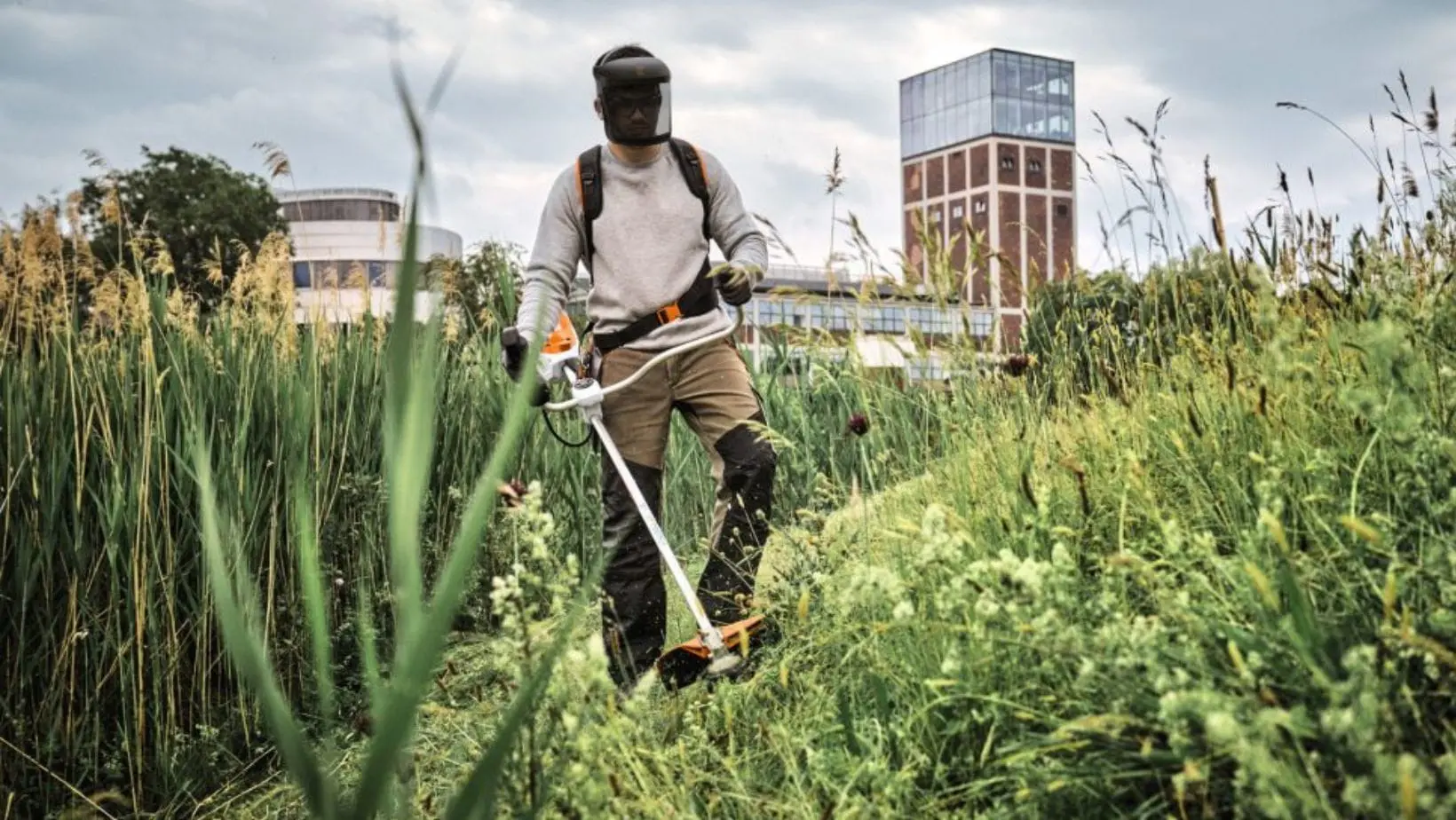
If you’re looking for a machine that offers more cutting power than a standard strimmer but isn’t quite as specialised as a clearing saw, a brushcutter is often the perfect solution. These versatile machines are designed to tackle everything from thick grass and nettles to dense weeds and light scrub, making them invaluable tools for gardeners, landscapers, and groundskeepers.
Today’s buyers face an interesting choice. While traditional petrol-powered machines remain hugely popular, battery technology has developed rapidly in recent years. Modern cordless models now offer extremely impressive levels of performance, challenging long-held assumptions about what a battery powered brush cutter can achieve.
So, should you choose a petrol brushcutter or a cordless brushcutter? The answer depends on the type of work you undertake, how often you use the machine, and what matters most to you as an operator.
In this guide, we’ll compare STIHL petrol and battery brushcutters across all the important areas, before looking at some real-world examples from the STIHL range.
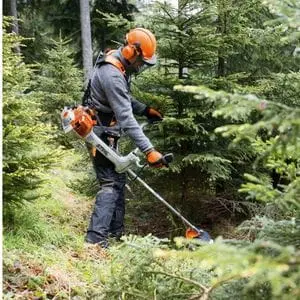 Why Choose a STIHL Brushcutter?
A brushcutter sits neatly between a strimmer and a clearing saw in terms of capability. While many people use the terms ‘brushcutter’ and ‘strimmer’ interchangeably, a true brushcutter is built to handle tougher vegetation and can usually accept both mowing heads and metal cutting blades.
This makes it an excellent choice for maintaining paddocks, orchards, rough grassland, roadside verges and overgrown garden areas. Whether you’re considering a traditional petrol brush cutter or a modern battery operated machine, you’re investing in a tool designed for far more demanding work than a standard grass trimmer.
Performance: Petrol Still Delivers Serious Power
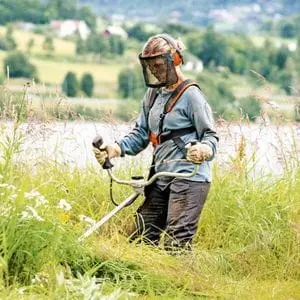 For many years, performance was the biggest reason to choose petrol. A quality STIHL petrol brush cutter provides outstanding cutting power and sustained performance, making it ideal for professional users and others who regularly work in dense vegetation.
Petrol machines continue to excel when tackling long periods of heavy-duty cutting. Refuelling takes barely a minute, allowing operators to keep working throughout the day with minimal interruption.
This is particularly important for contractors managing large sites where downtime needs to be kept to a minimum. A heavy duty petrol brush cutter remains a trusted choice for demanding agricultural, forestry and commercial grounds maintenance applications.
That said, battery technology has advanced dramatically. STIHL’s latest cordless machines now deliver performance levels that would have seemed impossible just a few years ago. Modern battery brushcutters are capable of handling surprisingly tough vegetation while maintaining excellent cutting efficiency.
For many users, the performance gap between petrol and battery is now negligible.
Runtime and Refuelling
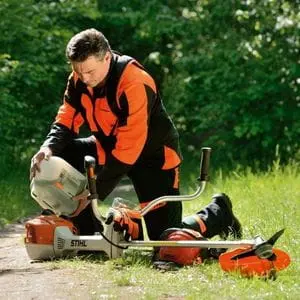 One of the most significant differences between petrol and battery-powered machines is how they are fuelled.
A petrol brush cutter offers virtually unlimited runtime as long as fuel is available. Refilling the tank takes just moments, allowing operators to continue working almost immediately.
Battery machines work differently. Runtime depends on the battery capacity, cutting attachment being used and the density of the vegetation. However, with additional batteries to hand, many professionals now complete full working days using cordless equipment.
The advantage of battery systems lies in their convenience. There’s no fuel mixing, no petrol storage and no concerns about stale fuel after long periods of inactivity. Simply charge the battery and you’re ready to go.
For occasional users and domestic customers, this simplicity can be a major benefit.
Noise Levels and Operator Comfort
 One area where battery-powered machines clearly excel is noise reduction.
Anyone who has spent hours operating a petrol strimmer with brush cutter knows that engine noise can become tiring over long periods of time. Although modern machines are quieter than older models, petrol engines still generate considerably more noise than their battery-powered counterparts.
A STIHL cordless brushcutter operates much more quietly, making it particularly useful in residential areas, schools, parks and other noise-sensitive environments.
Lower vibration levels also contribute to operator comfort. Many users report feeling less tired after prolonged use of a battery powered brush cutter, particularly during demanding maintenance work.
This can make a noticeable difference when using the machine regularly throughout the growing season.
Maintenance Requirements
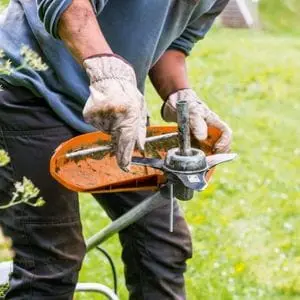 Maintenance is another area where battery-powered equipment offers clear advantages.
Petrol engines require regular servicing. Air filters need cleaning, spark plugs require inspection, fuel systems need maintenance and various engine components must be kept in good working order.
There’s nothing particularly difficult about this maintenance, but it does take time and attention.
A battery operated brush cutter has far fewer moving parts. Without a combustion engine, there’s no need to worry about fuel filters, carburettors or spark plugs. Routine maintenance is generally limited to cleaning the machine, inspecting cutting attachments and caring for the batteries.
For many users, this reduced maintenance burden is one of the strongest arguments for choosing cordless equipment.
Weight and Handling
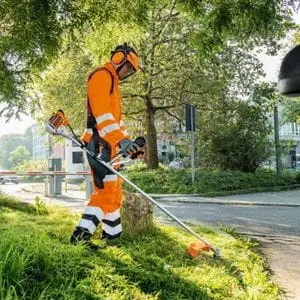 When comparing brushcutters, overall weight only tells part of the story.
Petrol machines carry both an engine and a fuel tank, while battery machines carry a motor and battery pack. Depending on the model and battery used, either system can feel heavier in certain situations.
What often matters more is balance.
Many users find that modern STIHL battery brush cutters excel in terms of balance and manoeuvrability. The absence of engine vibration can also make them feel lighter during operation, even when actual weight differences are relatively small.
Ultimately, though, comfort depends on the individual user, their chosen machine, and the type of work being carried out.
Entry-Level Comparison: STIHL FS 55 vs STIHL FSA 80
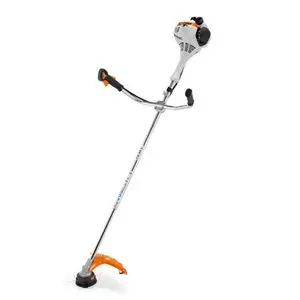 For demanding domestic work, the STIHL FS 55 has long been one of the best brush cutters petrol users can buy.
Powered by a dynamic 2-MIX engine, the FS 55 delivers the versatility needed for thicker grass, weeds and general vegetation management. It offers the traditional advantages associated with a STIHL petrol strimmer and brush cutter, including reliable starting and impressive cutting power.
Let’s compare this machine with the STIHL FSA 80.
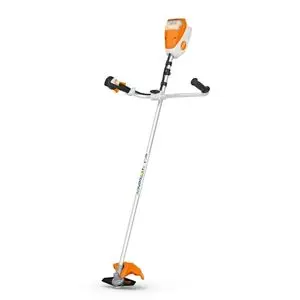 The FSA 80 battery operated brush cutter represents a significant step forward in battery technology and is arguably the closest equivalent currently available within STIHL’s battery range. Like the FS 55, it accepts both mowing heads and metal grass-cutting blades, allowing it to tackle a wide variety of vegetation.
For most domestic users, the FSA 80 provides a compelling alternative. It delivers excellent cutting performance, produces just 81 dB(A) at the operator’s ear, and offers up to 60 minutes of continuous runtime with a single STIHL AK 30 Battery.
In short, the FS 55 remains attractive for those who value unlimited runtime and traditional petrol power, while the FSA 80 appeals to users seeking convenience, quieter operation and modern battery efficiency.
Professional Comparison: STIHL FS 240 C-E vs STIHL FSA 200
 At the more demanding end of the market, the comparison becomes particularly interesting.
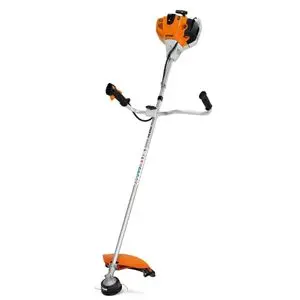
The STIHL FS 240 C-E is a professional-grade petrol brushcutter designed for intensive vegetation management. It’s a machine frequently chosen by contractors, estates and agricultural users who require serious cutting capability.
As a powerful STIHL petrol brush cutter, this machine excels when fitted with metal blades and can tackle dense growth with confidence. The innovative ErgoStart technology makes firing up the engine easy, while STIHL’s anti-vibration system and excellent ergonomics make the machine ideal for prolonged professional use.
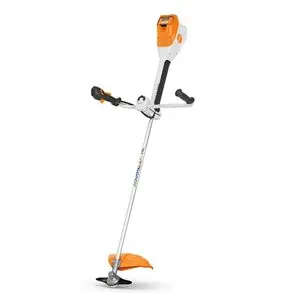 The closest battery equivalent is probably the STIHL FSA 200.
Developed specifically for professional applications, the FSA 200 STIHL cordless brushcutter offers exceptionally high levels of performance. It is designed for demanding mowing, clearing and scrub-cutting work, being capable of handling jobs that were once the exclusive territory of petrol-powered machines.
Compared with the FS 240 C-E, the FSA 200 offers quieter operation, even lower vibrations and reduced maintenance requirements. For contractors working in urban environments, schools, hospitals or residential developments, these advantages can be extremely valuable.
The FS 240 C-E, however, continues to offer the benefits of instant refuelling and sustained performance in remote locations where charging facilities may be limited.
For many professional users, the decision comes down less to cutting capability and more to their working environment.
The Growing Popularity of Battery Technology
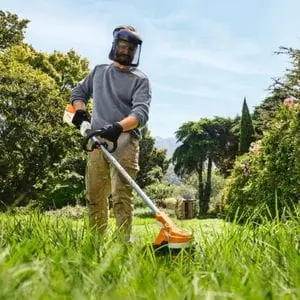 The rise of cordless outdoor power equipment has transformed the market in recent years. Many customers who once automatically chose a petrol brush cutter now seriously consider battery alternatives.
Cordless STIHL strimmer brush cutters deliver excellent performance, impressive reliability and a far more convenient ownership experience than earlier generations of battery equipment.
This doesn’t mean petrol is becoming obsolete. Far from it. Many professionals still rely on petrol-powered equipment every day, and STIHL continues to develop some of the industry’s finest petrol brushcutters and STIHL clearing saws.
Instead, today’s buyers benefit from having more choice than ever before.
Which Type of Brushcutter Should You Choose?
If you regularly work in remote locations, require uninterrupted runtime or simply prefer the feel of traditional machinery, a petrol brushcutter remains a solid investment. STIHL manufactures some of the best petrol brush cutters on the market, providing years of reliable service and outstanding cutting performance.
If quieter operation, reduced maintenance and user convenience are higher priorities, a modern battery brushcutter may prove the better option. Again, many of the best cordless brush cutters are built by STIHL, delivering performance levels that satisfy even demanding commercial users.
Ultimately, both technologies have their strengths. The right choice depends on your working environment, the tasks you carry out, and your personal preferences.
Find Your Perfect STIHL Brushcutter at GMD
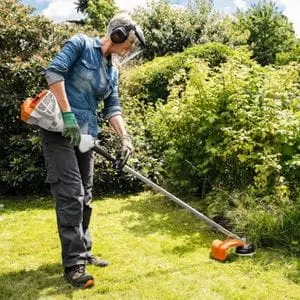 Whether you’re searching for a cordless STIHL electric brush cutter for home use, a professional STIHL battery brush cutter, or a traditional petrol brush cutter and strimmer for remote work, Garden Machinery Direct offers one of the UK’s most comprehensive ranges of STIHL brushcutters for sale.
From the versatile STIHL FSA 80 and professional-grade FSA 200 to trusted petrol models such as the FS 55 and FS 240 C-E, you’ll find brushcutters designed to suit any user and budget.
And if you’re still unsure whether a petrol STIHL strimmer and brush cutter or battery-powered model is right for your needs, our friendly and knowledgeable team is always happy to help. We’ll take the time to understand your requirements and recommend the machine that’s best suited to your needs.
Browse our range of STIHL cordless brushcutters and strimmers and petrol strimmer brush cutters today to discover why so many customers trust us for all their STIHL brushcutter needs.